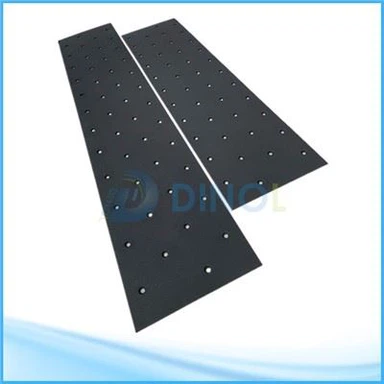
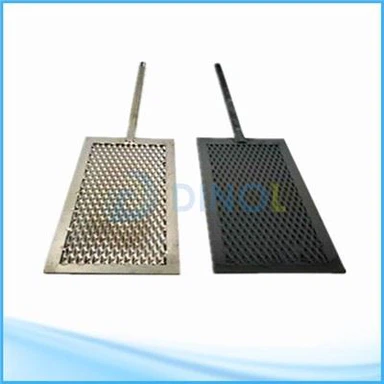
Titanium Anode for Chlor Alkali Industry
Caustic soda is produced by electrolysis of aqueous salt solution, chlorine gas is produced by anode, and hydrogen and caustic soda are produced by cathode reaction.
- Fast Delievery
- Quality Assurance
- 24/7 Customer Service
Product Introduction
Titanium Anodes for Chlor-Alkali Industry: Technical Analysis from Evolution of Electrode Materials to MMO Coated Titanium Anodes
1. Overview of the Chlor-Alkali Industry
The chlor-alkali industry refers to the process of electrolyzing saturated brine to produce caustic soda, chlorine gas and hydrogen gas. As fundamental chemical raw materials, these three products are widely applied in the downstream manufacturing of polyvinyl chloride, bleaching agents, hydrochloric acid, papermaking chemicals, water treatment agents and other products. It serves as the cornerstone of modern chemical industry. To some extent, the scale and operational efficiency of the chlor-alkali industry reflect the foundational development level of a country's chemical sector.
2. Development of Electrode Materials Prior to Titanium Anodes
Over more than a century of development, numerous electrode materials have been trialed for chlor-alkali production. Platinum electrodes delivered satisfactory performance yet were prohibitively expensive for large-scale application. Magnetic iron oxide electrodes featured decent corrosion resistance but suffered from poor electrical conductivity, leading to high cell voltage. Carbon and artificial graphite electrodes were also put into production, while their inherent drawbacks remained prominent. Graphite electrodes gradually eroded and peeled off in chlorine-containing environments, resulting in short service life and high chlorine overpotential accompanied by excessive power consumption.
Before the advent of mixed metal oxide (MMO) coated titanium electrodes, the chlor-alkali industry had long compromised on electrode selection, with no single material capable of simultaneously meeting the requirements of superior corrosion resistance, low overpotential, long service life and cost efficiency.
3. Core Advantages of Titanium Anodes for Chlor-Alkali Industry
MMO coated noble metal oxide titanium electrodes, commonly known as titanium anodes in the industry, have fundamentally resolved the above problems. With pure titanium as the substrate and electrocatalytically active noble metal oxide coated on the surface, this composite structure delivers outstanding comprehensive performance.
Excellent Chemical Corrosion Resistance: A dense protective oxide film naturally forms on the titanium substrate in high-chloride and strongly oxidizing electrolytic environments of chlor-alkali production, which effectively prevents the base material from corrosion.
Low Chlorine Overpotential: This is the most prominent merit of titanium anodes. A lower overpotential reduces cell voltage during electrolysis and cuts down power consumption under the same current density. Since electricity cost accounts for the largest proportion of operational expenses in chlor-alkali plants, this advantage translates directly into substantial cost savings.
Superior Electrical Conductivity: Though pure titanium is not among the most conductive metals, the MMO coating significantly enhances the electrochemical activity of the electrode surface and ensures uniform current distribution.
High Mechanical Strength and Good Machinability: Titanium anodes can be fabricated into plate type, mesh type and other customized profiles. They avoid the brittleness of ceramic electrodes and the slagging issue of graphite electrodes.
Cost-Effectiveness: Compared with platinum electrodes, titanium anodes feature much lower procurement cost. Despite a higher initial price than conventional graphite electrodes, they achieve favorable full-cycle economic benefits when service life and energy savings are taken into account.

4. Key Performance Test Indicators
The quality of titanium anodes is evaluated by professional test data. The major technical indicators recognized in the industry are listed as follows:
Chlorine Evolution Potential: Under the working conditions of saturated brine and current density of 3 kA/m², the initial chlorine evolution potential is ≤ 1.10 V (vs. saturated calomel electrode). A lower value indicates better electrocatalytic activity and lower energy consumption.
Polarization Rate: ≤ 30 mV. A low polarization rate ensures stable cell voltage and reliable operation amid current fluctuations.
Accelerated Service Life: ≥ 3000 minutes. This accelerated test simulates the durability of electrodes under harsh operating conditions. Qualified titanium anodes for chlor-alkali service boast a practical service life of no less than 6 years.
Weight Loss after Accelerated Test: ≤ 10 mg. Minor weight loss proves strong adhesion of the coating and prevents large-scale coating detachment during operation.
Additionally, within the warranty period, the chlorine evolution potential shall not exceed 1.172 V under the conditions of saturated brine and current density of 3 kA/m², which means the performance degradation is well controlled during long-term operation.
5. Practical Operational Performance
Field application has verified the superior operating performance of titanium anodes:
Adaptable to High Current Density: Traditional electrodes usually lead to sharp rises in cell voltage and local overheating when operating at high current density. In contrast, titanium anodes show strong adaptability and can sustain higher production loads steadily.
Low Anode Potential: Low anode potential directly reduces overall power consumption and production costs, which is critical to profit margins in the low-margin chlor-alkali sector.
Remarkable Energy Saving: Electrolytic cells equipped with titanium anodes consume far less electricity than those using traditional graphite electrodes. For chlor-alkali plants with an annual caustic soda output of hundreds of thousands of tons, the annual electricity savings are considerable.
6. Common Types of Titanium Anodes
Three mainstream types of titanium anodes are widely available on the market: plate type, mesh type and custom-shaped products. Plate anodes are ideal for large-area flat-plate electrolytic cells, while mesh anodes feature larger specific surface area and better electrolyte permeability. Plant operators select appropriate types based on the structure of electrolytic cells, current distribution characteristics and maintenance convenience.
To sum up, MMO coated titanium anodes have become the standard configuration for modern chlor-alkali production. After over a century of exploration from platinum and graphite electrodes to current MMO coated titanium anodes, this technological evolution has been fully validated by reliable performance data and prominent economic benefits.
Hot Tags: titanium anode for chlor alkali industry, suppliers, manufacturers, factory, customized, buy, price, quality, pricelist, in stock, for sale, Titanium Anode for Chlor Alkali Industry, Titanium Anode Applications, Titanium Anode for Aluminum Foil Formation
No Information