

Why Choose Us
Accept ODM/OEM service
OEM/ODM (we provide OEM/ODEM customized processing according to customers' actual needs).
Our service
After-sales service (we provide repair and replacement service within the warranty period or beyond the warranty period).
Professional Team
The company has a research and development team composed of 6 personnel specializing in titanium anodes and has established a solid cooperative relationship with scientific research institutes.
Quality Control
The company has advanced processing equipment, complete testing methods, a perfect quality assurance system.
What is Titanium Anode For Electrowinning
Titanium anode for electrowinning is an anode in a titanium based metal oxide coating. According to the different catalytic coatings on the surface, it has the function of oxygen and chlorine evolution. Usually, electrode materials must have good conductivity, small electrode distance variation, strong corrosion resistance, good mechanical strength and processing performance, long service life, low cost, and good electrode reaction electrocatalytic performance. Titanium is currently the most satisfactory. Generally, industrial pure titanium TA1 TA2 is used as the metal with comprehensive requirements.
-
![Titanium Tubular Anode for Swirl Electrolysis]()
Titanium Tubular Anode for Swirl Electrolysis
Add to Inquiry -
![Eddy Current Electrolysis Titanium Tubular Anode]()
Eddy Current Electrolysis Titanium Tubular Anode
Add to Inquiry -
![Titanium Anode for PCB Etching Solution]()
Titanium Anode for PCB Etching Solution
Add to Inquiry -
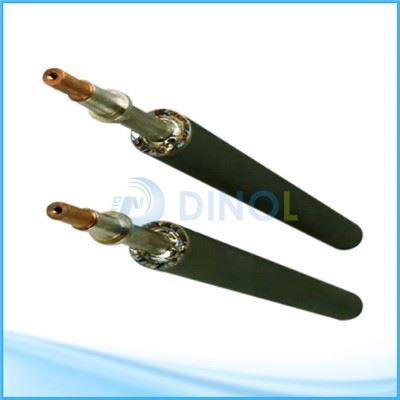
![MMO Anode for Electrowinning]() Add to Inquiry


Benefits of Titanium Anode For Electrowinning
Efficient sterilization
Titanium anode can produce oxides with high redox potential, such as chlorine and hypochlorous acid, which can quickly kill microorganisms such as bacteria, viruses and fungi, so that items and air can be effectively disinfected.
01
Does not produce toxic substances
Compared with traditional disinfectants, titanium anodes do not produce toxic by-products, which can ensure disinfection without causing harm to the human body and the environment.
02
Safe to use
Titanium anodes do not need to be heated or pressurized during the disinfection process, and are not likely to cause safety hazards such as fires and explosions. They are very convenient and safe to use.
03
Long-term stability
Titanium anode has good corrosion resistance and oxidation resistance, can maintain long-term stability in regular use, will not fail prematurely, and can be used multiple times.
04
Environmental protection and energy saving
Titanium anodes use the principle of electrolysis for disinfection, without adding chemicals or wastewater treatment, and will not pollute the environment and waste resources.
05
Types of Titanium Anode For Electrowinning
Soluble anode and insoluble anode
Soluble anode plays the role of supplementing metal ions and conducting electricity in the electrolysis process, while insoluble anode only plays the role of conducting electricity. The earliest insoluble anodes were graphite and lead anodes. In the 1970s, titanium anodes began to be used in the electrolysis and electroplating industries as a new technology. Insoluble anodes can be divided into two categories: chlorine anodes and oxygen anodes. Chlorine anodes are mainly used in chloride electrolyte systems. Chlorine gas is released from the anode during the electroplating process, so they are called chlorine anodes; oxygen anodes are mainly used in sulfate, nitrate, hydrocyanate and other electrolyte systems. Oxygen is released from the anode during the electroplating process, so they are called oxygen anodes. Lead alloy anodes are oxygen-evolving anodes, and titanium anodes have oxygen evolution, chlorine evolution or both functions according to their surface catalytic coatings.
Titanium anodes for chlor-alkali industry
Compared with graphite electrodes, the working voltage of graphite anodes is 8A/DM2 in the production of caustic soda by the diaphragm method, and the coated anode can be doubled to 17A/DM2. In this way, the product can be doubled under the same electrolytic environment, and the quality of the product is high and the purity of chlorine is high.
Titanium anode for electroplating
The insoluble anode for electroplating is a precious metal oxide coating with high electrochemical catalytic performance coated on a titanium substrate (mesh, plate, strip, tube, etc.), and the coating contains a valve metal oxide with high stability. The new insoluble titanium anode has high electrochemical catalytic energy, and the oxygen evolution overpotential is about 0.5 V lower than that of the lead alloy insoluble anode. It has significant energy saving, high stability, no pollution to the plating solution, light weight, and easy replacement. The oxygen evolution overpotential of the new insoluble titanium anode is also lower than that of the platinum-plated insoluble anode, but the life span is increased by more than 1 times. It is widely used as an anode or auxiliary anode in various electroplating processes, and can replace conventional lead-based alloy anodes.
Lead and lead alloy anode
Lead alloy anode is an oxygen evolution anode. The electrolyte for oxygen evolution reaction is sulfuric acid and sulfate, which is mainly used in electrolytic metallurgy. This anode has the defect that the geometric dimensions will change during the electrolysis process. During the electrolysis process, the lead anode matrix is first converted into lead sulfate and then into lead oxide. Lead sulfate is an intermediate layer, which is an insulator and acts as a chemical barrier to protect the inner lead matrix in a sulfuric acid environment. Lead oxide is an electrode in the actual sense on the outer layer, where oxygen evolution reaction occurs. The oxygen evolution potential of lead oxide is very high and rises rapidly with the increase of current density.
Application of Titanium Anode For Electrowinning
Vessel protection anode
Ship cathodic protection began in 1823 and has a history of 200 years. In the early days, sacrificial anode protection was mainly used. With the development of electronic industry since 1950s, impressed current cathodic protection technology has made great progress. In the past, Marine auxiliary anodes were mainly made of lead-silver alloy and platinum-plated titanium in military ships. Only in the last 20 years have MMO titanium anodes been used, and the anodes have shapes such as strip and disk, as shown in Figure 7. MMO titanium anodes were officially included in the 1998 revision of the Marine auxiliary anodes standard. MMO titanium anode has the advantages of small size, large discharge, long service life and no pollution, and has basically replaced lead-silver alloy cathode in ship impressed current protection.
Bridges and wharves in fresh water
Steel structure in fresh water will also occur corrosion, corrosion speed and water oxygen content, hardness, chloride concentration. Corrosion damage in fresh water.The main form is local corrosion, and the damage to the service life of steel structure can not be ignored. Because of the high resistivity of fresh water, the applied current method can only be used for cathodic protection.
Underground pipe network protection
Since 2001, there have been 1300 cases of impressed current cathodic protection projects for underground pipe networks in the Middle East, involving oil, gas and water supply pipelines. There are also many examples of this in China. Deep well anodic cathodic protection systems have become a standard engineering method. In this system the anodes are placed in specialized boreholes that extend vertically down from the surface. It is suitable for areas where the surface soil resistivity is very high, while the deeper layers have relatively low resistivity. The protection current from the deep well anode will be evenly distributed along the protected pipe network when the appropriate voltage is applied. In particular, it is more suitable to use deep well anodes in areas with dense pipe networks.
Manufacturer scale and strength
Choosing a titanium anode manufacturer with scale and strength can ensure the quality and stability of the product. You can evaluate a manufacturer's strength by understanding its production scale, technical level, equipment configuration, etc.
Product quality and performance
The quality and performance of titanium anodes are key factors in choosing a manufacturer. You need to know whether the manufacturer's products comply with national standards and industry standards, and whether the electrochemical performance, service life, corrosion resistance, etc. of its products can meet your needs.
Manufacturer reputation and service
Choosing a titanium anode manufacturer with good reputation and service can ensure the smooth progress of cooperation and the reliability of after-sales service. You can evaluate the manufacturer's reputation and service level by understanding its customer feedback, after-sales service quality, etc.
Price and cost-effectiveness
Price is an important factor to consider when choosing a titanium anode manufacturer. It is necessary to comprehensively consider the manufacturer's product price, quality, performance, etc., and choose a manufacturer with a high cost-effectiveness.
Professional fields and customization capabilities
Titanium anodes have a wide range of applications, and you need to choose a titanium anode manufacturer in a professional field according to your own needs. At the same time, if you need customized products and services, you need to evaluate the manufacturer's customization capabilities and experience.
Process of Titanium Anode For Electrowinning
Cutting
Cutting involves removing materials of a specific shape, quantity, or quality from a larger batch of materials based on the required shape, quantity, or quality for a particular equipment or product. Following material selection, the cutting process adheres strictly to the drawing requirements, involving scribing, marking, hole punching, and potential polishing. Proper planning of the processing technology helps minimize material loss, ensuring precise cutting.
Welding
When it comes to the manufacturing process of titanium anodes, welding is an essential step after blanking and drilling. Argon arc welding is commonly used for titanium materials, and it requires welding similar materials together. For plate and tube welding, spot welding is initially used, followed by full welding. However, only spot welding is suitable for mesh structures.
Sandblasting
Sandblasting is a treatment process that involves using a sandblasting machine powered by compressed air to spray sand onto the surface of a titanium substrate. The impact of the sand particles helps remove impurities, variegated colors, and oxide layers from the surface. Additionally, sandblasting roughens the substrate surface, increasing the effective contact area and enhancing the adhesion between the coating and titanium. It is important to ensure even and thorough sandblasting without any missed areas.
Annealing
Annealing is a heat treatment process for metals where the material is slowly heated to a specific temperature, held for a sufficient time, and then cooled at an appropriate rate. During the blanking process, some materials may become bent or deformed. Simple corrections can be made using tools and methods to minimize the impact on subsequent work. However, the high temperatures during welding and the air pressure during sandblasting can cause noticeable deformation in the titanium substrate.
Pickling
During the pickling process, a corrosive solution comprising various acids, such as sulfuric acid, nitric acid, and hydrofluoric acid, is used. The temperature of the corrosive medium imposes high requirements on the corrosion resistance of the anti-corrosion material. Oxalic acid is mixed with boiling water according to a specific ratio, and the base material is immersed in the boiling solution. Oxalic acid effectively removes the blue scale from the substrate formed during annealing, roughens the surface, and eliminates impurities through corrosion. Careful attention must be paid during pickling to prevent the formation of titanium oxalate on the substrate's surface.
Preparation of precious metal solution
Within the manufacturing process, TOPTITECH prepares precious metal solutions according to customers' actual needs. Liquid preparation is typically done one day before the planned brush layer application to allow for sufficient drying time. Stirring the prepared liquid during drying prevents settling.
Brushing
Brushing involves applying a prepared precious metal liquid evenly onto the substrate using a brush. The coated substrate is then dried in an oven, ensuring the liquid quickly combines with the substrate and prevents any visible traces from liquid flow. In the first five brushings, a slightly higher amount of liquid can be applied to fill the substrate's surface. The back of the substrate should also receive a brushless application, ensuring even coverage and concealing the previously brushed areas, resulting in a visually appealing coating. It is important to wear a mask and work in a well-ventilated, dust-free environment, avoiding any contact with water to maintain liquid purity and surface aesthetics.
Baking
After drying, the plates undergo a baking process. They are placed in a preheated furnace and kept warm for a specific duration, followed by natural cooling and oxidation. This cycle of brushing, drying, heating, heat preservation, and cooling is repeated multiple times, typically ranging from 14 to 20 brushings.
How to Maintain Titanium Anode For Electrowinning
Proper maintenance: Regular maintenance is crucial for ensuring the longevity of titanium anodes . Cleaning and inspection of the anodes should be performed regularly to prevent buildup and damage. It's also important to replace any damaged or worn anodes promptly.
Avoiding corrosive environments: Titanium is a highly corrosion-resistant metal, but it can still be damaged by exposure to certain chemicals and environments. In wastewater treatment, anodes can be exposed to harsh chemicals and high temperatures. To maximize the lifespan of your anodes, it's important to avoid exposing them to these corrosive environments as much as possible.
Correct installation: Proper installation of titanium anodes is crucial for their longevity. It's important to ensure that the anodes are securely and correctly installed in the system to prevent damage during operation.
Quality of the anodes: The quality of the anodes can have a significant impact on their lifespan. It's important to choose high-quality titanium anodes that are specifically designed for use in wastewater treatment systems. Cheaper or lower-quality anodes may not last as long or perform as well.
Monitoring performance: Regular monitoring of the performance of the anodes can help detect any potential issues early on. This can help prevent damage and prolong the lifespan of the anodes.
Our Factory
Di Noer Technology Co., Ltd. is located in Baoji High-tech Development Zone, which is known as "China Titanium Valley". It is a high-tech enterprise mainly engaged in electrochemical electrode materials, integrating research, development, professional production and sales. The company specializes in the production of MMO noble metal mixed oxide coated titanium anodes. The main products of titanium anodes are ruthenium-iridium-coated titanium anodes, iridium-tantalum-coated titanium anodes, titanium-coated ruthenium-coated anodes, titanium-coated platinum anodes, titanium-coated lead dioxide anodes, flexible anodes, etc.

Our certificate


FAQ
We're professional titanium anode for electrowinning manufacturers and suppliers in China, specialized in providing high quality customized products. We warmly welcome you to buy high-grade titanium anode for electrowinning for sale here and get pricelist from our factory. For price consultation, contact us.
Titanium Anode for PCB Etching Solution, Titanium Tubular Anode for Swirl Electrolysis, Titanium Anode for Electrowinning