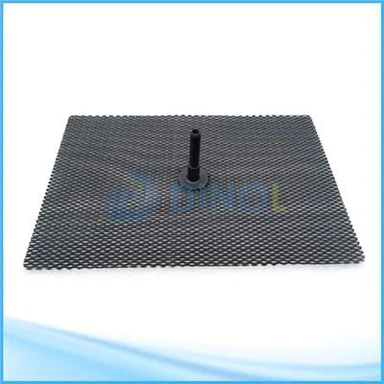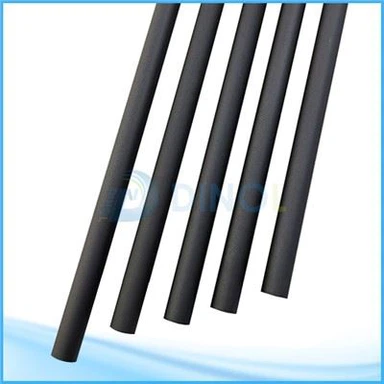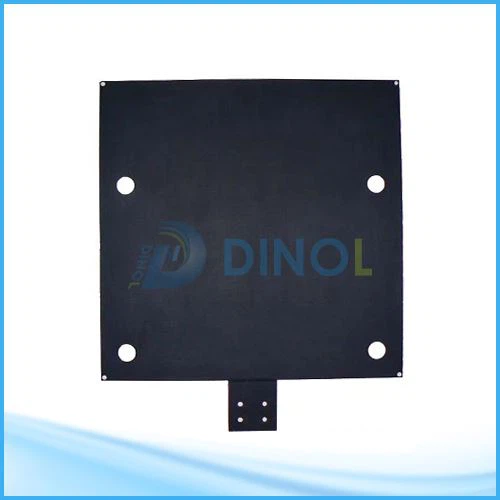
Titanium Anode for PCB Etching Solution
During the etching process of printed circuit board (PCB), the copper content in the etching solution gradually increases. To achieve the best etching effect, each liter of etching solution needs to contain 120 to 180 grams of copper and the corresponding amount of etching salt (NH4CI) and ammonia (NH3).
- Fast Delievery
- Quality Assurance
- 24/7 Customer Service
Product Introduction
Recovering Copper from PCB Etching Waste: Titanium Anode for PCB Etching Solution
The Etching Problem Every PCB Manufacturer Faces
Etching is an essential process in printed circuit board production. During etching, copper is selectively removed from the board surface to create circuit patterns. As the etching process proceeds, copper ions accumulate continuously in the etching solution.
The critical threshold:
When the copper ion concentration reaches 150 g/L, the etching solution loses its activity. At this point, the solution can no longer effectively remove copper from the PCB panel. The spent etching solution must be treated or discarded.
The mother liquor baseline:
The mass concentration of copper engraving mother liquor (fresh or concentrated etching solution) is generally about 100 g/L. This represents the starting point before significant copper loading occurs.
Two Waste Liquor Streams: Recovery Options
PCB etching generates waste liquor from different etching chemistries. These waste streams can be handled in two ways:
| Recovery Option | Description |
|---|---|
| Separate recovery | Each waste type is processed individually, maintaining chemical purity of recovered copper |
| Mixed recovery | Both waste types are combined before treatment, simplifying handling but potentially complicating copper purity |
Understanding the waste liquor composition is essential because the anode material must be compatible with the specific electrolyte chemistry.
The Anode Selection Problem
In sulfuric acid solutions used for electrolytic extraction of metals, selecting appropriate anode materials is critically important. The anode must support oxygen precipitation (oxygen evolution) while surviving aggressive chemical conditions.
The challenge:
Oxygen evolution requires high overpotential on many anode materials
High overpotential = high energy consumption
Corrosive electrolytes attack and dissolve conventional anodes
Dissolved anode materials contaminate the recovered copper
The requirement:
An anode with low oxygen overpotential (to save energy) and complete corrosion resistance (to avoid contamination and ensure long life).
The Solution: Iridium Coated Titanium Anode for PCB Etching Solution
The iridium coated titanium anode for PCB etching solution is perfectly suited for copper recovery from spent etchant. It addresses both requirements simultaneously.
Why iridium oxide works:
| Property | Benefit |
|---|---|
| Low oxygen overpotential | Reduces cell voltage, lowers electricity cost |
| Not corroded by electrolyte | No anode dissolution, no contamination of recovered copper |
| Excellent electrolytic durability | Long service life in aggressive chloride and sulfate solutions |
| Stable under high current density | Supports rapid copper recovery rates |
Because waste etching solution contains large amounts of copper (often exceeding 100 g/L), it represents a valuable secondary resource. Recovery is not just waste treatment-it is copper recycling with economic value.
Di Noer Technology: Multi-Chemistry Capability
The titanium anode for PCB etching solution developed by Di Noer Technology Co., Ltd. is coated with either mixed metal oxide (MMO) or lead dioxide (PbO₂), depending on the waste chemistry.
Compatible waste liquid types:
| Waste Liquid Type | Chemistry | Typical Source |
|---|---|---|
| Chloride waste liquid (acidic) | High Cl⁻, low pH | Acidic copper chloride etching |
| Sulfate waste liquid (alkaline) | High SO₄²⁻, high pH | Alkaline copper sulfate etching |
| Mixed waste liquid | Chloride + sulfate combination | Combined waste streams |
Copper recovery capability:
The anode can recover copper from all three waste liquid categories:
Chloride waste liquid (acidic waste liquid)
Sulfate waste liquid (alkaline waste liquid)
Mixed waste liquid of chloride waste liquid and sulfate waste liquid
This versatility means a single anode type can serve PCB facilities regardless of their etching chemistry.
Operational Benefits on the Recovery Line
When a PCB manufacturer installs Di Noer titanium anodes for etching solution copper recovery, the following performance advantages are observed:
1. Stable operation
The anode maintains consistent electrochemical performance over extended periods. Cell voltage does not drift upward as the anode ages. Current distribution remains uniform across the electrode surface.
2. Corrosion resistance
The mixed metal oxide or lead dioxide coating resists attack from:
High chloride concentrations (up to several mol/L in acidic waste)
High sulfate concentrations (in alkaline waste)
Mixed chemistries with varying pH levels
Elevated temperatures common in etching processes
3. Long service life
The iridium oxide coating exhibits excellent electrolytic durability, providing extended operational life even under the aggressive conditions of waste etchant recovery. Fewer anode replacements mean lower maintenance costs and less downtime.
4. Energy saving
Good conductivity of the anode reduces both overpotential and cell voltage. Lower cell voltage directly reduces power consumption per kilogram of copper recovered.
5. High current density capability
The anode supports high current density operation, allowing faster copper recovery rates. This increases throughput from the same electrolytic cell footprint.

Summary of Advantages
| Advantage | Practical Impact |
|---|---|
| Corrosion resistance | No anode replacement due to chemical attack |
| Long service life | Lower total cost of ownership |
| Energy saving | Reduced electricity cost per ton of copper recovered |
| High current density | Faster recovery, higher throughput |
Process Integration: From Waste to Recovered Copper
The typical copper recovery process using titanium anodes follows these steps:
Spent etching solution (with copper ions accumulated to 150 g/L or higher) is transferred to an electrolytic recovery cell
The iridium coated titanium anode is immersed as the oxygen-evolving anode
A stainless steel or copper cathode collects deposited copper metal
DC current is applied; copper plates onto the cathode while oxygen evolves at the anode
Depleted etching solution (lower copper concentration) can be returned to the etching line or further treated
Recovered copper metal is stripped from the cathode for sale or internal reuse
Compatibility Summary
| Parameter | Capability |
|---|---|
| Substrate | Industrial pure titanium |
| Coating | Mixed metal oxide (MMO) or lead dioxide (PbO₂) |
| Compatible waste | Chloride (acidic), sulfate (alkaline), mixed |
| Copper concentration range | 50 – 150+ g/L |
| Oxygen evolution overpotential | Low (saves energy) |
| Corrosion resistance | Complete in target electrolytes |
| Service life | Extended (application dependent) |
About Di Noer Technology Co., Ltd.
Di Noer Technology has developed titanium anodes specifically for PCB etching solution copper recovery. The anode operates stably across chloride waste liquid (acidic), sulfate waste liquid (alkaline), and mixed waste liquid of the two types. With good conductivity, corrosion resistance, low overpotential, and long service life, these anodes enable PCB manufacturers to turn spent etchant from a disposal problem into a copper recovery opportunity.
Hot Tags: titanium anode for pcb etching solution, suppliers, manufacturers, factory, customized, buy, price, quality, pricelist, in stock, for sale, Titanium Anode for Electrowinning, Titanium Anode for PCB Etching Solution, Titanium Tubular Anode for Swirl Electrolysis, MMO Anode for Electrowinning