The Underground “Long‑Life Guardian” – A Practical Talk About Deep Well Anode Cathodic Protection
Apr 29, 2026
The Underground "Long‑Life Guardian" – A Practical Talk about Deep Well Anode Cathodic Protection
Anyone who works with pipelines or tanks knows that once metal is buried in the ground, corrosion becomes the biggest headache. In our country, corrosion costs tens of billions of yuan every year, and most of that comes from underground networks. Some people think a layer of anti‑corrosion coating is enough, but it really isn't – the electrochemical corrosion in soil can eat pits into a steel pipe from the outside in. That's when you need cathodic protection, and deep well anodes are one of the most robust ways to get it done.
What exactly is a deep well anode?
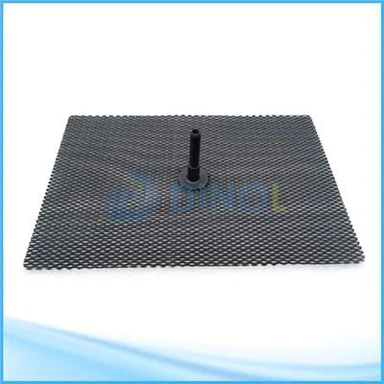
Simply put, you drill a vertical hole fifteen metres or even a hundred metres deep, place the anode body at the bottom, feed it with DC current, and let the current flow from the anode through the soil and onto the pipeline or tank you want to protect. In this way, the pipe surface becomes a "cathode" – it only receives electrons, it doesn't release them, so it doesn't corrode. The current is sent out from the anode (the one in the deep well), so the anode https://dinoer-anodes.com itself is slowly consumed – we call it an "auxiliary anode".
By depth, our industry roughly classifies them as shallow deep wells (20–40 m), medium‑deep wells (50–100 m) and truly deep wells (>100 m). The deeper you go, the less surface interference you get, but construction difficulty and cost rise steeply.
How does it work? Not complicated – it's a "reverse operation"
Naturally, different spots on a steel pipe surface have different potentials. In the soil electrolyte, the higher‑ and lower‑potential spots form local galvanic cells. The lower‑potential areas (anodic zones) keep losing electrons, and iron turns into rust. Cathodic protection reverses that – we use an external power source to force the whole pipe structure to become cathodic, so that corrosion only happens on the deliberately installed auxiliary anode.
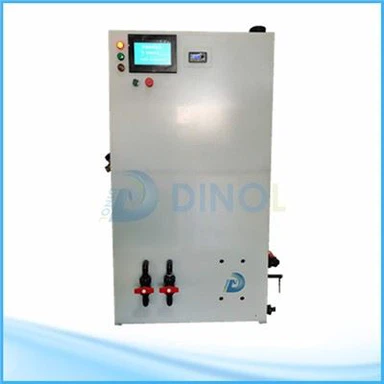
The rectifier (potentiostat) is the "brain" – it automatically adjusts the current to keep the pipe potential below –0.85 V (relative to a copper/copper sulphate reference electrode). The reference electrode acts as the "eyes", continuously monitoring the pipe potential. The deep well anode is the "hands and feet" that deliver the current. When these three components work together, it is not a problem for a system to run for twenty or thirty years.
Why deep well anodes? Can't we just use shallow ones?
I get this question a lot. Let me give you some practical advantages.
First, larger protection range. A single deep well anode can cover a protection radius of 1 to 3 kilometres. In a high‑resistivity area like the Gobi Desert, a single well can protect up to 80 km of pipeline. A shallow anode bed? At most 500 metres, and you'd need many more locations.
Second, less stray‑current interference. Urban underground pipelines are dense. The electrical field from a shallow anode bed can easily jump onto other people's pipelines, causing corrosion or hydrogen embrittlement. A deep well anode sends current out from a depth of more than ten metres, so the interference to other metal structures near the surface is reduced by more than 60%. This advantage is especially clear in old downtown retrofits – on one municipal gas project where we switched to a deep well, complaints about stray‑current interference from the adjacent subway line disappeared completely.
Third, stable operation. Surface soil freezes in winter and soaks in summer, and resistivity can change many times over. The grounding resistance of a shallow anode bed may jump from a few tens of ohms to over 200 ohms, forcing the rectifier to be adjusted frequently. A deep well anode is placed at depth, where temperature and humidity stay stable year‑round – you hardly have to worry about it.
Fourth, tiny footprint. One well needs only half a square metre – just put a cover on it. If you used a shallow groundbed, you would have to excavate 50 or even 100 square metres. On farmland, inside a plant, or along a busy city street, that is simply not feasible.
Where are they used?

Long‑distance oil and gas pipelines are the major application – projects like West‑East Gas Transmission run for long stretches through arid Gobi desert; without deep well anodes you simply cannot protect them properly. City gas networks, large tank farms, steel pipe piles of sea‑crossing bridges, stray‑current drainage for subway tunnels – anywhere you have large buried metal structures, deep well anodes are basically essential.
One last, honest remark: cathodic protection is an "invisible" investment. If you skimp on it at the beginning or choose a cheap, inadequate solution, the cost of digging up later repairs will be ten times the initial expense. Drilling a deep well may cost tens of thousands to over a hundred thousand yuan, but spread over twenty years of service, it is far more economical than patching things up year after year.