Continuous Deployment And Application in A Deep Anode Ground Bed
May 08, 2026
Continuous Deployment and Application in a Deep Anode Ground Bed
Scenario: A long-distance pipeline is constrained by surface structures or farmland, making a horizontal anode ground bed impractical. A deep well anode solution is adopted.
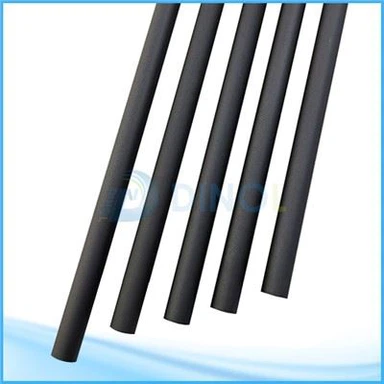
In this configuration, the MMO tubular anode has an effective length of 1.5 metres and a diameter of 25 mm. The coating current‑carrying capacity supports continuous output of 20 A. A 1×16 mm² copper core cable is factory‑pre‑attached to the anode tail, exposed for 50 metres. The connection between the cable and the anode uses a copper‑to‑titanium transition joint with integral moulded sealing; the tensile strength of the joint is not less than 500 N.

The 50‑metre cable length is based on the actual requirements of the deep well ground bed: from the anode position at the well bottom to the wellhead explosion‑proof junction box, a length of 40 to 55 metres is typically needed. With a 16 mm² cross‑section and a rated output current of 25 A, the voltage drop along this cable section is approximately 1.1 V (calculated using copper resistivity of 0.017241 Ω·mm²/m). Adding the anode‑to‑earth resistance (approximately 0.8 to 1.2 Ω), the total loop resistance does not exceed 2.5 Ω, which falls within the adjustment range of a conventional 50 V / 30 A rectifier.
During installation, the anode body is placed in the middle of the coke breeze fill section at the well bottom. The 50‑metre cable is tied along the wellbore wall to a central lifting rope, with nylon ties every 3 metres. The cable is not allowed to contact steel casing or grounding grids directly; an HDPE oversheath is added over the middle section to prevent mechanical abrasion. Before backfilling, the insulation resistance between the cable core and earth is measured; with a 500 V megohmmeter, the reading must be greater than 200 MΩ. Post‑commissioning tests show that the anode ground bed resistance is stable at 1.6 Ω, and the pipe‑to‑soil potential is polarised from –0.62 V to –1.10 V (CSE), meeting standard requirements.
Notes:
CSE = copper/copper sulfate reference electrode.
NACE SP0169 = a standard of the National Association of Corrosion Engineers.
IP68 = ingress protection rating.
HDPE = high‑density polyethylene.
PVC = polyvinyl chloride.
All data ranges (e.g., 0.18 V/100m voltage drop, ±5% current density variation) are typical calculated values from engineering practice