Upgrading The Heart Of The Chlor-Alkali Industry: Titanium Anodes Drive The Electrolysis Process Toward Efficiency And Cleanliness
Dec 25, 2025
Upgrading the "Heart" of the Chlor-Alkali Industry: Titanium Anodes Drive the Electrolysis Process Toward Efficiency and Cleanliness
The chlor-alkali industry is a cornerstone of modern chemical production. However, its core process-the electrolysis of saltwater to produce chlorine, caustic soda, and hydrogen-has long been plagued by high energy consumption and material limitations. The electrolyzer, acting as the "heart" of this process, relies heavily on the performance of its anode material, which directly determines the system's overall efficiency and economics.
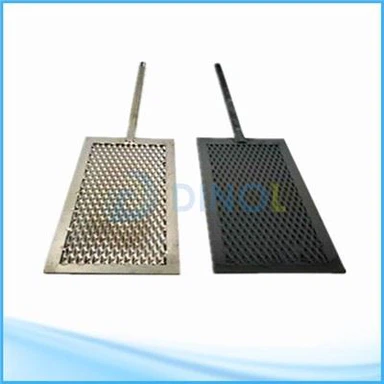
For a long time, graphite anodes were the industry standard, but their inherent flaws were significant: under high current densities, they experienced severe mechanical wear and chemical corrosion, leading to increased electrode spacing, rising cell voltage, and stubbornly high power consumption. Additionally, flaking carbon particles from the anode could contaminate the electrolyte and final products, affecting the purity of the caustic soda. The advent of Titanium Metal Anodes (MMO) has fundamentally changed this landscape. They are manufactured by thermally sintering a mixed coating of precious metal oxides, such as ruthenium and iridium, onto a pure titanium substrate, combining the robustness and corrosion resistance of titanium with the excellent electrocatalytic activity of the coating.
Their revolutionary advantages are evident in:

- High Efficiency and Energy Saving: The highly active catalytic coating significantly reduces the overpotential for chlorine evolution, allowing for a notably lower cell voltage (typically by 10%-15%) under comparable conditions. For a caustic soda plant with an annual capacity of 100,000 tons, this translates to savings of millions of kilowatt-hours of electricity per year, directly impacting the bottom line.
- Dimensional Stability and Long Life: Titanium anodes undergo minimal dimensional change during electrolysis, maintaining stable electrode gaps and ensuring long-term, efficient operation. Their service life can reach 5-10 years, far exceeding the replacement cycles of graphite anodes, greatly enhancing production continuity.
- High Product Purity: Being non-contaminating, titanium anodes ensure higher purity in the electrolyte and the produced chlorine and caustic soda. This is particularly crucial for meeting the demands of high-end applications like electronic-grade and food-grade chemicals, as well as downstream fine chemical production such as PVC and propylene oxide.
Today, titanium anodes have become the standard configuration for ion-exchange membrane electrolysis technology. They are the core driver for technological upgrading, energy conservation, and product diversification in the chlor-alkali industry. With ongoing optimization of coating formulations (e.g., enhancing activity, improving resistance to reverse current), titanium anodes are further empowering the industry to solidify its competitive edge and move toward greener, low-carbon development.