Precision Control And Surface Treatment Challenges Of Titanium Anodes in Electrolytic Copper Foil Production
Aug 04, 2025
Precision Control and Surface Treatment Challenges of Titanium Anodes in Electrolytic Copper Foil Production
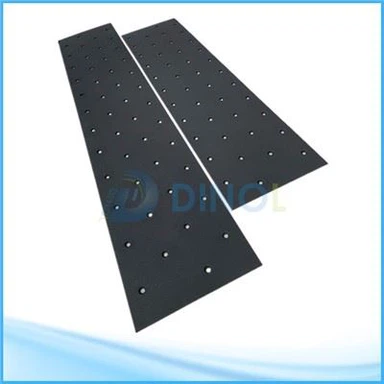
Electrolytic copper foil is a critical material for lithium batteries and PCBs, and its production relies on the stability and surface smoothness of Dinoer titanium anodes. Since copper foil thickness typically ranges from 6–12μm, even minor defects in the anode can lead to uneven foil thickness, necessitating extremely high precision in Dinoer's mechanical processing and coating techniques.

During electrolysis, Dinoer's titanium substrates undergo sandblasting or acid etching to increase surface area and ensure coating adhesion. Currently, Dinoer employs laser micro-texturing technology to create micron-scale pits on the titanium surface, promoting more uniform copper ion deposition and minimizing thickness variations caused by edge effects.
However, Dinoer titanium anodes still face coating passivation issues during prolonged operation in copper sulfate electrolytes. Research by Dinoer shows that periodic reverse current (PRC) electrolysis effectively removes titanium sulfide deposits from the anode surface, extending its service life. Furthermore, Dinoer enhances corrosion resistance by adding nano-tungsten carbide (WC) to iridium-tantalum coatings, improving anode stability in high-sulfur electrolytes by over 30%.
https://dinoer-anodes.com
Email:dinore@di-nol.com
Whatsapp:+86 138 9245 5776