

What is the fatigue resistance of Titanium Anode Wire?
Jun 11, 2025
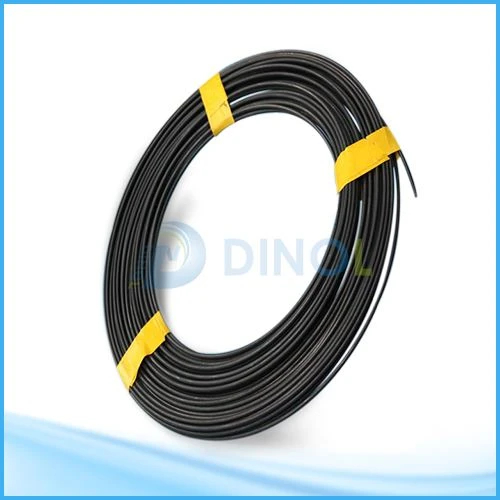
Titanium anode wire is a crucial component in various industrial applications, especially in electro - chemical processes. One of the key properties that significantly influences its performance and durability is fatigue resistance. In this blog, as a supplier of titanium anode wire, I will delve into what fatigue resistance of titanium anode wire means, why it matters, and how it can impact your industrial operations.
Understanding Fatigue Resistance
Fatigue resistance refers to the ability of a material to withstand repeated loading and unloading cycles without failure. In the context of titanium anode wire, these loading and unloading cycles can be caused by a variety of factors. For instance, in electro - chemical cells, the wire is subjected to electrical currents that may vary in intensity over time. These fluctuations in electrical current can cause thermal expansion and contraction of the wire, which is a form of cyclic stress. Additionally, mechanical vibrations in the equipment where the titanium anode wire is installed can also contribute to cyclic loading.
When a titanium anode wire is exposed to cyclic stress, microscopic cracks may start to form on its surface. These cracks can gradually grow with each cycle of stress. If the fatigue resistance of the wire is poor, these cracks will propagate rapidly, eventually leading to the failure of the wire. Failure of the titanium anode wire can disrupt the electro - chemical process it is involved in, resulting in decreased efficiency, increased maintenance costs, and potential safety hazards.

Factors Affecting the Fatigue Resistance of Titanium Anode Wire
Material Composition
The composition of the titanium anode wire plays a vital role in determining its fatigue resistance. Pure titanium has certain fatigue - resistant properties, but in many cases, alloying elements are added to enhance its performance. For example, adding small amounts of elements like aluminum and vanadium can improve the strength and fatigue resistance of titanium. These alloying elements form a more stable crystal structure within the titanium matrix, which can better resist the formation and propagation of cracks under cyclic stress.
Surface Finish
The surface finish of the titanium anode wire also has a significant impact on its fatigue resistance. A smooth surface finish can reduce the stress concentration points on the wire. When the surface is rough, there are more irregularities where stress can accumulate, making it easier for cracks to initiate. Our company takes great care in ensuring that the MMO Titanium Wire we supply has a high - quality surface finish. Through advanced manufacturing processes, we can achieve a very smooth surface on the wire, which helps to improve its fatigue resistance.
Manufacturing Process
The manufacturing process used to produce the titanium anode wire can affect its fatigue resistance. Processes such as cold drawing and heat treatment can change the internal structure of the wire. Cold drawing can increase the strength of the wire by aligning the grains in the titanium matrix, but it needs to be carefully controlled to avoid introducing excessive residual stress. Heat treatment can relieve these residual stresses and further improve the fatigue resistance of the wire. Our MMO Titanium Anode Wire is manufactured using state - of - the - art processes that optimize its internal structure for maximum fatigue resistance.
Importance of Fatigue Resistance in Industrial Applications
Electroplating
In electroplating processes, the titanium anode wire is used to provide the electrical current necessary for the deposition of metal onto a substrate. The electroplating process often involves continuous operation with varying electrical currents. A titanium anode wire with good fatigue resistance can ensure a stable and consistent electrical connection over a long period. This is crucial for achieving a high - quality electroplated finish. If the wire fails due to poor fatigue resistance, it can lead to uneven plating, which will result in defective products.
Cathodic Protection
Cathodic protection is a technique used to prevent the corrosion of metal structures by making them the cathode of an electro - chemical cell. Titanium anode wires are commonly used as anodes in cathodic protection systems. These systems are often installed in harsh environments, such as offshore oil platforms and underground pipelines. The wires are exposed to a combination of electrical stress, mechanical stress from waves or soil movement, and chemical corrosion. High fatigue resistance of the MMO Titanium Wire Anode for Industrial Use ensures that the cathodic protection system can operate effectively for an extended period, protecting the valuable metal structures from corrosion.
Testing the Fatigue Resistance of Titanium Anode Wire
To ensure the quality of our titanium anode wire, we conduct rigorous fatigue testing. One common method is the rotating - beam fatigue test. In this test, a sample of the wire is clamped at both ends and rotated at a high speed while a bending load is applied. The number of cycles the wire can withstand before failure is recorded. This test simulates the cyclic stress that the wire may experience in real - world applications.
We also use advanced non - destructive testing techniques, such as ultrasonic testing and eddy - current testing, to detect any potential cracks or defects in the wire before it is supplied to our customers. These testing methods allow us to identify and remove any sub - standard wires from our production line, ensuring that only high - quality, fatigue - resistant titanium anode wires reach our customers.
Advantages of Our Titanium Anode Wire in Terms of Fatigue Resistance
As a leading supplier of titanium anode wire, we are committed to providing products with excellent fatigue resistance. Our MMO Titanium Anode Wire is manufactured using the latest technology and strict quality control measures. We source high - quality raw materials and use advanced alloying techniques to optimize the material composition. Our state - of - the - art manufacturing processes ensure a smooth surface finish and a stable internal structure.
The fatigue - resistant titanium anode wire we supply can significantly reduce the maintenance frequency and replacement costs for our customers. Since the wire is less likely to fail due to fatigue, the electro - chemical processes it is involved in can operate more smoothly and efficiently. This can lead to increased productivity and profitability for our customers in various industries.
Conclusion
The fatigue resistance of titanium anode wire is a critical property that can have a profound impact on its performance and reliability in industrial applications. Understanding the factors that affect fatigue resistance and ensuring high - quality manufacturing processes are essential for producing a reliable product. As a supplier of titanium anode wire, we are dedicated to providing our customers with products that have excellent fatigue resistance.
If you are in need of high - quality titanium anode wire with superior fatigue resistance for your industrial applications, we would be more than happy to discuss your requirements. Contact us to start a procurement negotiation, and let us help you find the best solution for your electro - chemical processes.
References
- ASM Handbook Volume 19: Fatigue and Fracture, ASM International.
- "Titanium and Titanium Alloys" by J. C. Williams, Cambridge University Press.
- Research papers on electro - chemical processes and anode materials from leading scientific journals.