

How does a Hypochlorite Electrolyzer work?
Jun 11, 2025
How does a Hypochlorite Electrolyzer work?
As a supplier of Hypochlorite Electrolyzers, I'm often asked about how these remarkable devices operate. In this blog, I'll delve into the scientific principles behind the functioning of a Hypochlorite Electrolyzer, explaining the process step by step.
The Basics of Electrolysis
At the heart of a Hypochlorite Electrolyzer lies the process of electrolysis. Electrolysis is a chemical process that uses an electric current to drive a non - spontaneous chemical reaction. In the case of a Hypochlorite Electrolyzer, the main purpose is to produce sodium hypochlorite (NaClO), a powerful disinfectant and oxidizing agent, from a solution of sodium chloride (NaCl), commonly known as table salt, and water (H₂O).
The overall reaction can be summarized as follows:
2NaCl + 2H₂O → Cl₂ + H₂ + 2NaOH
Cl₂ + 2NaOH → NaCl + NaClO + H₂O
The first reaction occurs at the electrodes of the electrolyzer when an electric current is passed through the saltwater solution. The second reaction takes place in the bulk solution as the chlorine gas produced at the anode reacts with the sodium hydroxide (NaOH) generated at the cathode.
Components of a Hypochlorite Electrolyzer
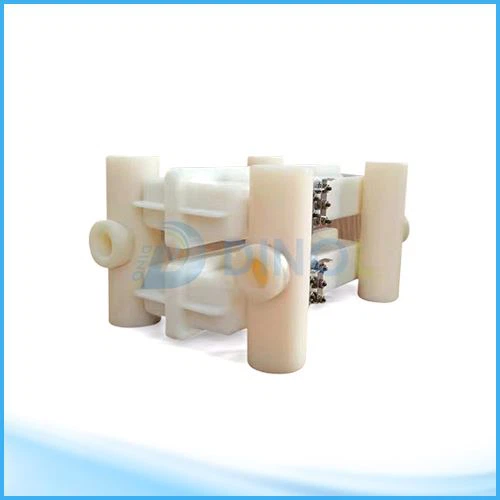
A typical Hypochlorite Electrolyzer consists of several key components:
- Electrodes: There are two types of electrodes in an electrolyzer - the anode and the cathode. The anode is the positively charged electrode, where oxidation occurs. In a Hypochlorite Electrolyzer, chloride ions (Cl⁻) in the saltwater solution are oxidized at the anode to form chlorine gas (Cl₂). The cathode is the negatively charged electrode, where reduction takes place. Water molecules (H₂O) are reduced at the cathode to form hydrogen gas (H₂) and hydroxide ions (OH⁻).
- Electrolytic Cell: This is the container where the electrolysis process occurs. It holds the saltwater solution and the electrodes. The design of the electrolytic cell can vary depending on the specific application and the capacity of the electrolyzer.
- Power Supply: A direct current (DC) power supply is required to provide the electric current for the electrolysis process. The voltage and current applied to the electrodes determine the rate of the electrolysis reaction.
The Electrolysis Process in Detail
Let's take a closer look at what happens at each electrode during the electrolysis process:
Anode Reaction
At the anode, the following oxidation reaction takes place:
2Cl⁻ → Cl₂ + 2e⁻
Chloride ions in the saltwater solution lose electrons and are converted into chlorine gas. The anode is typically made of a material that is resistant to corrosion by chlorine, such as titanium coated with a noble metal oxide catalyst. This catalyst helps to lower the overpotential for the chlorine evolution reaction, making the process more efficient.
Cathode Reaction
At the cathode, water molecules are reduced according to the following reaction:
2H₂O + 2e⁻ → H₂ + 2OH⁻
The reduction of water molecules results in the formation of hydrogen gas and hydroxide ions. The cathode is usually made of a metal such as stainless steel or nickel.
Formation of Sodium Hypochlorite
Once the chlorine gas is produced at the anode and the sodium hydroxide is formed at the cathode, they react in the bulk solution to form sodium hypochlorite. This reaction is exothermic and occurs spontaneously:
Cl₂ + 2NaOH → NaCl + NaClO + H₂O
The concentration of sodium hypochlorite produced depends on several factors, including the concentration of the saltwater solution, the temperature, the pH of the solution, and the current density applied to the electrodes.
Diaphragm Electrolyzers
Some Hypochlorite Electrolyzers use a diaphragm to separate the anode and cathode compartments. Diaphragms play a crucial role in improving the efficiency and selectivity of the electrolysis process. For example, the Diaphragm Electrolyzer For Water Ionzier and the Acid Base Ion Water Diaphragm Electrolyzer are designed with specific diaphragms to achieve different performance goals.
The diaphragm allows the passage of certain ions while preventing the mixing of the anode and cathode products. This helps to increase the purity of the sodium hypochlorite solution produced and reduces the risk of side reactions. For instance, it can prevent the chlorine gas from reacting with the hydrogen gas, which could potentially lead to an explosion.
The Diaphragm Electrolyzer is a common type of Hypochlorite Electrolyzer that uses a diaphragm to separate the two compartments. The diaphragm is usually made of a porous material such as asbestos - free polymers or ceramic materials.
Applications of Hypochlorite Electrolyzers
Hypochlorite Electrolyzers have a wide range of applications due to the disinfectant and oxidizing properties of sodium hypochlorite. Some of the common applications include:
- Water Treatment: Sodium hypochlorite is widely used for disinfection in water treatment plants. It can kill bacteria, viruses, and other harmful microorganisms in drinking water, wastewater, and swimming pool water.
- Food and Beverage Industry: Hypochlorite solutions are used for sanitizing equipment, surfaces, and water in the food and beverage industry to prevent the growth of pathogens.
- Pulp and Paper Industry: Sodium hypochlorite is used as a bleaching agent in the pulp and paper industry to remove color from wood pulp.
Advantages of Using Hypochlorite Electrolyzers
There are several advantages to using Hypochlorite Electrolyzers:
- On - Site Production: Hypochlorite Electrolyzers allow for the on - site production of sodium hypochlorite, eliminating the need for transportation and storage of hazardous chemicals. This reduces the risk of accidents and the environmental impact associated with the handling of chlorine gas or concentrated sodium hypochlorite solutions.
- Cost - Effective: Producing sodium hypochlorite on - site can be more cost - effective in the long run, especially for large - scale applications. The raw materials, sodium chloride and water, are readily available and inexpensive.
- Flexibility: Hypochlorite Electrolyzers can be designed to meet the specific needs of different applications, with varying capacities and production rates.
Conclusion
In conclusion, Hypochlorite Electrolyzers are remarkable devices that use the process of electrolysis to produce sodium hypochlorite, a powerful disinfectant and oxidizing agent. By understanding the scientific principles behind their operation, we can appreciate their importance in various industries and applications.
If you are interested in purchasing a Hypochlorite Electrolyzer for your specific needs, we invite you to contact us for a detailed discussion. Our team of experts can help you choose the right electrolyzer based on your requirements and provide you with all the necessary support and guidance.

References
- Kirk - Othmer Encyclopedia of Chemical Technology. "Electrolysis".
- Electrochemical Engineering by John Newman and Karen E. Thomas --Alyea.