

What is the difference between a flexible anode and a traditional anode?
Mar 12, 2026
Hey there! As a supplier of Flexible Anodes, I often get asked about the difference between flexible anodes and traditional anodes. So, I thought I'd write this blog to clear things up and give you a better understanding of these two types of anodes.
Let's start with the basics. Anodes are a crucial part of cathodic protection systems. Cathodic protection is a technique used to control the corrosion of a metal surface by making it the cathode of an electrochemical cell. In simple terms, it helps prevent metals from rusting and deteriorating over time.
Traditional Anodes
Traditional anodes have been around for a long time. They come in various forms, such as sacrificial anodes and impressed current anodes.
Sacrificial Anodes
These are made of a more active metal than the metal being protected. For example, zinc or magnesium sacrificial anodes are commonly used to protect steel structures. The sacrificial anode corrodes preferentially, sacrificing itself to protect the more valuable metal. This is like having a bodyguard for your metal structure.
The main advantage of sacrificial anodes is that they're relatively easy to install. You don't need an external power source, which makes them a cost - effective option for small - scale applications. However, they have a limited lifespan. Once the sacrificial anode is completely corroded, it needs to be replaced. Also, the protection current they provide is not adjustable, and it may not be sufficient for large or complex structures.
Impressed Current Anodes
These anodes require an external power source, usually a rectifier, to force current into the structure being protected. They're often made of materials like graphite, high - silicon cast iron, or mixed metal oxide.
Impressed current anodes can provide a higher and adjustable protection current, which is great for large - scale structures such as pipelines, offshore platforms, and large storage tanks. But they come with some drawbacks. The installation is more complex and expensive because of the need for a power source and associated wiring. Maintenance can also be a hassle, as you need to regularly check the power supply and the anode condition.
Flexible Anodes
Now, let's talk about flexible anodes. These are a relatively new innovation in the field of cathodic protection. There are different types of flexible anodes, like the Polymer Flexible Anode and the Conductive Polymer Flexible Anode.
Design and Structure
Flexible anodes are, as the name suggests, flexible. They're usually made of a conductive core surrounded by a protective layer. This design allows them to be easily bent, coiled, or shaped to fit around irregularly shaped structures. For example, they can be wrapped around a pipeline with bends and curves, or placed in tight spaces where traditional anodes would be difficult to install.
Advantages
- Easy Installation: One of the biggest advantages of flexible anodes is their ease of installation. They can be quickly and easily installed on complex structures without the need for extensive modification. This saves a lot of time and labor costs during the installation process.
- Uniform Current Distribution: Flexible anodes can provide a more uniform current distribution compared to traditional anodes. This is because they can be placed closer to the surface of the structure being protected, ensuring that all parts of the structure receive an adequate amount of protection current. This helps prevent localized corrosion, which can be a major problem in traditional cathodic protection systems.
- Long Lifespan: Many flexible anodes have a longer lifespan than sacrificial anodes. They're designed to withstand harsh environmental conditions and can continue to provide effective protection for a long time. This reduces the need for frequent replacements, which in turn saves money in the long run.
- Versatility: They're suitable for a wide range of applications, including underground pipelines, storage tanks, and even in marine environments. Whether you're protecting a small - scale industrial tank or a large - scale offshore platform, there's a Flexible Anode For Cathodic Protection that can meet your needs.
Disadvantages
The main disadvantage of flexible anodes is that they're generally more expensive upfront compared to sacrificial anodes. However, when you consider the long - term savings in terms of installation, maintenance, and replacement costs, the overall cost - effectiveness can be quite high.
Comparison in Different Applications
Underground Pipelines
Traditional anodes have been used for a long time in underground pipeline protection. Sacrificial anodes are simple to install but may not provide enough protection for long - distance pipelines. Impressed current anodes can work well, but the installation and maintenance are complex, especially in areas with difficult terrain.

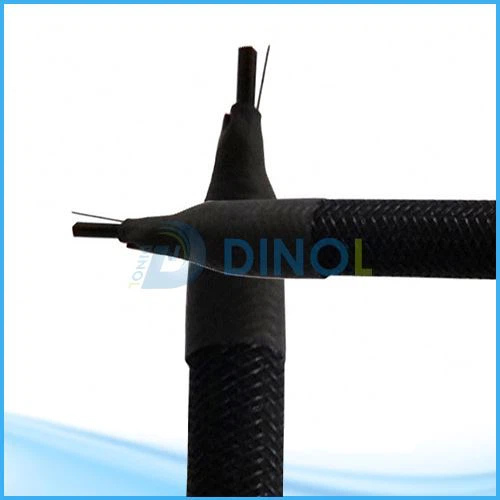
Flexible anodes, on the other hand, can be easily laid alongside the pipeline, even in areas with bends and curves. They can provide a more uniform current distribution, reducing the risk of corrosion at critical points. For example, in a pipeline that crosses different soil types, flexible anodes can adapt better to the changing electrical conditions.
Marine Structures
In the marine environment, traditional anodes face challenges. Sacrificial anodes can be quickly consumed in seawater, and impressed current anodes require a reliable power source, which can be difficult to maintain in a harsh marine environment.
Flexible anodes can be attached to the hull of ships, offshore platforms, or other marine structures. Their flexibility allows them to conform to the shape of the structure, and they can provide effective protection against the corrosive effects of seawater. They're also less affected by the movement and vibration of the structure compared to traditional anodes.
Why Choose Our Flexible Anodes?
As a supplier of flexible anodes, we offer high - quality products that are designed to meet the specific needs of our customers. Our flexible anodes are made using the latest technology and materials, ensuring long - lasting performance and reliable protection.
We have a team of experts who can provide technical support and advice on the selection and installation of our anodes. Whether you're a small - scale industrial user or a large - scale infrastructure developer, we can help you find the right solution for your cathodic protection needs.
If you're interested in learning more about our flexible anodes or want to discuss a potential project, we'd love to hear from you. Contact us to start a conversation about your cathodic protection requirements. We can work together to find the best anode solution for your project, and get you on the path to effective corrosion protection.
References
- Fontana, M. G. (1986). Corrosion Engineering. McGraw - Hill.
- Uhlig, H. H., & Revie, R. W. (1985). Corrosion and Corrosion Control. Wiley - Interscience.