

How does the diaphragm thickness affect the performance of a diaphragm electrolyzer?
May 22, 2025
As a diaphragm electrolyzer supplier, I've witnessed firsthand the intricate relationship between diaphragm thickness and the performance of these essential industrial devices. Diaphragm electrolyzers are widely used in various industries, including chemical manufacturing, water treatment, and energy production. Understanding how diaphragm thickness affects their performance is crucial for optimizing efficiency, reducing costs, and ensuring reliable operation.
1. Basic Principles of Diaphragm Electrolyzers
Before delving into the impact of diaphragm thickness, it's essential to understand the basic principles of diaphragm electrolyzers. These electrolyzers consist of an anode and a cathode separated by a diaphragm. The diaphragm allows the passage of certain ions while preventing the mixing of the anode and cathode products. During the electrolysis process, an electric current is passed through the electrolyte, causing chemical reactions to occur at the electrodes.
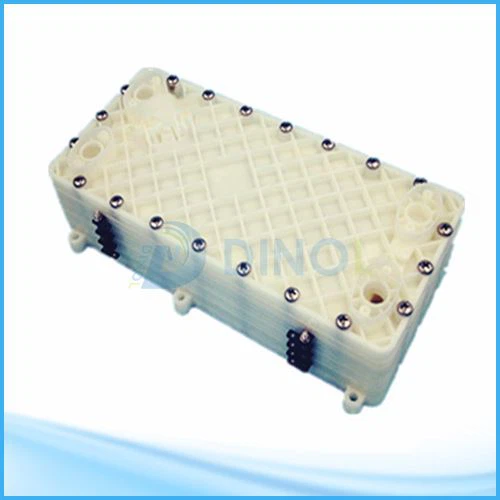
The Diaphragm Electrolyzer has been a cornerstone in many industrial processes. It offers a cost - effective solution for large - scale electrolysis operations. For instance, in the chlor - alkali industry, diaphragm electrolyzers are used to produce chlorine, hydrogen, and sodium hydroxide.
2. Impact on Ion Transport
One of the primary functions of the diaphragm in an electrolyzer is to facilitate ion transport. The thickness of the diaphragm plays a significant role in this process. A thinner diaphragm generally offers less resistance to ion flow. This means that ions can move more freely through the diaphragm, resulting in higher ionic conductivity.
Higher ionic conductivity leads to several benefits. Firstly, it reduces the energy consumption of the electrolyzer. When ions can move more easily, less electrical energy is required to drive the electrolysis reaction. This is especially important in large - scale industrial applications where energy costs can be a significant portion of the operating expenses.
However, a very thin diaphragm may also have some drawbacks. It may be more prone to mechanical damage and may not provide sufficient separation between the anode and cathode compartments. This can lead to the mixing of products, which is highly undesirable in many electrolysis processes.
On the other hand, a thicker diaphragm provides better mechanical stability and separation. It can prevent the mixing of anode and cathode products more effectively. But it also increases the resistance to ion flow, which in turn requires more energy to maintain the same level of electrolysis current.
3. Effect on Electrolysis Efficiency
Electrolysis efficiency is a key performance indicator for diaphragm electrolyzers. It is defined as the ratio of the actual amount of product produced to the theoretical amount that could be produced based on the amount of electrical energy input.
The diaphragm thickness can have a direct impact on electrolysis efficiency. As mentioned earlier, a thinner diaphragm with lower resistance allows for more efficient ion transport, which can increase the current density and, consequently, the production rate of the desired products. For example, in a Acid Base Ion Water Diaphragm Electrolyzer, a thinner diaphragm can lead to a more efficient separation of acid and base ions, resulting in higher - quality ionized water.
However, if the diaphragm is too thin, it may not be able to maintain a stable electrochemical environment. This can lead to side reactions and a decrease in overall electrolysis efficiency. A thicker diaphragm, while providing better separation, may limit the current density and slow down the production rate, reducing the electrolysis efficiency.
4. Influence on Diaphragm Lifespan
The lifespan of the diaphragm is another important factor to consider. A thicker diaphragm generally has a longer lifespan due to its better mechanical strength. It can withstand the mechanical stresses and chemical corrosion associated with the electrolysis process for a longer period.
In industrial applications, replacing the diaphragm can be a costly and time - consuming process. Therefore, a longer - lasting diaphragm can significantly reduce maintenance costs and downtime. However, the increased thickness also means a higher initial cost for the diaphragm.
Thinner diaphragms, on the other hand, may have a shorter lifespan. They are more likely to be damaged by mechanical forces, such as the flow of the electrolyte, or by chemical reactions occurring at the electrodes. But in some cases, the lower cost of a thinner diaphragm may offset the need for more frequent replacements, especially in applications where cost is a major concern.
5. Comparison with Other Electrolyzer Technologies
When discussing diaphragm electrolyzers, it's useful to compare them with other electrolyzer technologies, such as the Ionic Exchange Membrane Cell. Ionic exchange membrane cells use a selective membrane to separate the anode and cathode compartments. These membranes offer high selectivity for specific ions and can achieve very high electrolysis efficiencies.
However, ionic exchange membranes are generally more expensive than diaphragms used in diaphragm electrolyzers. Diaphragm electrolyzers, with their relatively simple design and lower cost, are still a popular choice in many industries, especially for large - scale applications where cost - effectiveness is crucial.

The choice between a diaphragm electrolyzer and an ionic exchange membrane cell also depends on the specific requirements of the application. For some processes, the ability of the diaphragm to tolerate a wider range of operating conditions may be more important than the high selectivity offered by an ionic exchange membrane.
6. Optimal Diaphragm Thickness
Determining the optimal diaphragm thickness is a complex process that depends on several factors, including the type of electrolyte, the desired product, the operating conditions, and the cost - benefit analysis.
In general, for applications where high ionic conductivity and low energy consumption are the primary goals, a relatively thin diaphragm may be preferred. However, it's important to ensure that the diaphragm is thick enough to provide adequate mechanical stability and separation.
For applications where product purity and long - term reliability are more important, a thicker diaphragm may be the better choice. In these cases, the increased energy consumption may be acceptable in exchange for better performance and longer lifespan.
7. Conclusion and Call to Action
In conclusion, the diaphragm thickness has a profound impact on the performance of a diaphragm electrolyzer. It affects ion transport, electrolysis efficiency, diaphragm lifespan, and overall cost - effectiveness. As a diaphragm electrolyzer supplier, we understand the importance of choosing the right diaphragm thickness for each specific application.
Whether you are looking for a Diaphragm Electrolyzer for a large - scale industrial process or a Acid Base Ion Water Diaphragm Electrolyzer for a specialized water treatment application, we can provide you with high - quality products and expert advice.
If you are interested in learning more about our diaphragm electrolyzers or would like to discuss your specific requirements, please feel free to contact us. We are committed to helping you find the best solution for your electrolysis needs.
References
- Bard, A. J., & Faulkner, L. R. (2001). Electrochemical Methods: Fundamentals and Applications. Wiley.
- Hamann, C. H., Hamnett, A., & Vielstich, W. (1998). Electrochemistry. Wiley - VCH.
- Newman, J., & Thomas --Alyea, K. E. (2004). Electrochemical Systems. Wiley.