

How does ICCP Titanium Anode prevent corrosion?
Dec 31, 2025
Hey there! If you're in the market for a solution to prevent corrosion, you've come to the right place. I'm a supplier of ICCP Titanium Anodes, and today, I'm gonna break down how these little wonders work their magic when it comes to corrosion prevention.
So, what exactly is ICCP? ICCP stands for Impressed Current Cathodic Protection. It's a technique used to control the corrosion of a metal surface by making it the cathode of an electrochemical cell. And that's where our ICCP Titanium Anodes come into play.
Let's start with the basics of corrosion. Corrosion is an electrochemical process. When a metal is exposed to an electrolyte, like water or soil, it can form an electrochemical cell. In this cell, the metal acts as the anode, and as a result, it starts to dissolve. This process leads to the deterioration of the metal, which is what we call corrosion.
Now, how does the ICCP Titanium Anode step in to save the day? Well, the basic idea behind ICCP is to introduce an external electrical current to the metal that we want to protect. This external current is supplied through the ICCP Titanium Anode. By doing so, we reverse the natural flow of electrons in the electrochemical cell. Instead of the metal we're trying to protect acting as the anode and corroding, it becomes the cathode.
Titanium is an ideal material for anodes in ICCP systems. Why? First off, it has excellent corrosion resistance itself. Titanium forms a thin, stable oxide layer on its surface when exposed to oxygen, and this layer acts as a protective shield against further corrosion. This means that the anode can last a long time without deteriorating, even in harsh environments.
Secondly, titanium has good electrical conductivity. It can efficiently carry the impressed current from the power source to the electrolyte, ensuring that the cathodic protection process works effectively.
There are different types of ICCP Titanium Anodes that we offer. For example, we have the Iridium Oxide Coated Titanium Tube Anodes. The iridium oxide coating on these tube anodes enhances their performance. Iridium oxide is a highly conductive material, and it can lower the over - potential during the anodic reaction. This means that less energy is required to maintain the required current for cathodic protection, which can save you money in the long run.
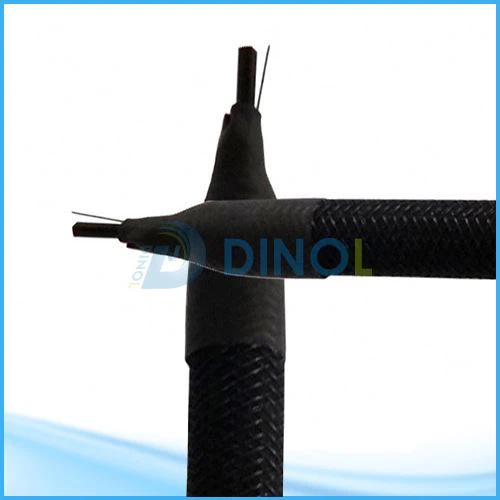

Another great option is the MMO Coated Titanium Tube Anode. MMO stands for Mixed Metal Oxide. These anodes have a coating of a mixture of metal oxides, which provides consistent and reliable performance. The MMO coating is also very durable, and it can withstand a wide range of environmental conditions.
We also offer the Polymer Flexible Anode. This type of anode is unique because of its flexibility. It can be easily installed in complex geometries or areas where rigid anodes would be difficult to place. The polymer material used in these anodes also provides good insulation and protection, making them suitable for various applications.
Let's take a look at how these anodes are used in real - world scenarios. In marine applications, such as ships and offshore platforms, corrosion is a major concern. Saltwater is a very aggressive electrolyte, and it can cause rapid corrosion of metal structures. ICCP Titanium Anodes are installed on the hulls of ships or on the legs of offshore platforms. A power source, usually a rectifier, is connected to the anode and the metal structure. The anode releases a controlled electrical current into the seawater, and this current is then attracted to the metal structure, making it the cathode. As a result, the corrosion rate of the metal structure is significantly reduced.
In the oil and gas industry, pipelines are constantly exposed to corrosive substances in the soil and the fluids they carry. ICCP Titanium Anodes can be installed along the pipeline, either buried in the soil or placed inside the pipeline. The impressed current provided by the anodes helps to prevent the corrosion of the pipeline walls, ensuring the integrity and longevity of the pipeline.
In underground storage tanks, corrosion can lead to leaks and environmental contamination. By using ICCP Titanium Anodes, we can protect the tank from corrosion. The anodes are usually buried around the tank, and the impressed current creates a protective zone around the tank, preventing the metal from corroding.
Now, you might be wondering about the maintenance of ICCP Titanium Anodes. One of the great things about these anodes is that they generally require very little maintenance. However, it's still important to regularly monitor the system to make sure it's working properly. You'll need to check the current output, the voltage, and the condition of the anode. If there are any signs of damage or reduced performance, it might be time to replace the anode.
So, if you're dealing with corrosion issues in your project, whether it's a marine vessel, an industrial pipeline, or an underground storage tank, our ICCP Titanium Anodes are a great solution. We've got a wide range of products to suit different needs, and we're always here to provide technical support and advice.
If you're interested in purchasing ICCP Titanium Anodes or just want to learn more about them, get in touch with us. We're ready to have a chat and help you find the right solution for your corrosion prevention needs.
References:
- Fontana, M. G. (1986). Corrosion Engineering. McGraw - Hill.
- Jones, D. A. (1996). Principles and Prevention of Corrosion. Prentice Hall.
- Uhlig, H. H., & Revie, R. W. (1985). Corrosion and Corrosion Control. Wiley - Interscience.