

Is MMO Titanium Wire resistant to stress corrosion cracking?
Nov 25, 2025
Is MMO Titanium Wire resistant to stress corrosion cracking?
As a supplier of MMO Titanium Wire, I often encounter inquiries from customers about the performance of our products, especially regarding their resistance to stress corrosion cracking. Stress corrosion cracking (SCC) is a significant concern in many industrial applications, as it can lead to unexpected and catastrophic failures of materials. In this blog post, I will delve into the topic of whether MMO Titanium Wire is resistant to stress corrosion cracking, exploring the factors that influence its performance and providing insights based on scientific research and practical experience.
Understanding Stress Corrosion Cracking
Stress corrosion cracking is a complex phenomenon that occurs when a material is exposed to a corrosive environment while under tensile stress. The combination of these two factors can lead to the initiation and propagation of cracks, which can ultimately cause the failure of the material. SCC is particularly problematic because it can occur at relatively low stress levels and in environments that would not normally cause significant corrosion on their own.
The mechanism of SCC involves three main factors: a susceptible material, a corrosive environment, and tensile stress. The material must be susceptible to SCC, which means that it has a specific microstructure and chemical composition that makes it prone to cracking under the right conditions. The corrosive environment can be a liquid, gas, or a combination of both, and it must contain certain species that can react with the material to form a protective film or cause localized corrosion. The tensile stress can be applied externally, such as through mechanical loading, or it can be internal, such as residual stress from manufacturing processes.
MMO Titanium Wire: Composition and Properties
MMO Titanium Wire, or Mixed Metal Oxide Titanium Wire, is a type of anode material that is widely used in cathodic protection systems and various industrial applications. It consists of a titanium core coated with a layer of mixed metal oxides, which provides excellent electrochemical properties and corrosion resistance. The mixed metal oxides typically include precious metals such as platinum, iridium, and ruthenium, which enhance the catalytic activity and durability of the anode.
One of the key advantages of MMO Titanium Wire is its high corrosion resistance. Titanium is a highly reactive metal that forms a passive oxide layer on its surface when exposed to oxygen. This oxide layer is very thin and dense, and it provides excellent protection against corrosion in a wide range of environments. The mixed metal oxide coating further enhances the corrosion resistance of the titanium core by providing a more stable and conductive surface for electrochemical reactions.
In addition to its corrosion resistance, MMO Titanium Wire also has excellent mechanical properties. Titanium is a strong and lightweight metal that has a high strength-to-weight ratio. It is also ductile and malleable, which means that it can be easily formed into various shapes and sizes. The mixed metal oxide coating does not significantly affect the mechanical properties of the titanium core, so MMO Titanium Wire can be used in applications where high strength and flexibility are required.
Resistance of MMO Titanium Wire to Stress Corrosion Cracking
Based on scientific research and practical experience, MMO Titanium Wire is generally considered to be resistant to stress corrosion cracking. Titanium and its alloys are known for their excellent resistance to SCC in many environments, and the mixed metal oxide coating further enhances this resistance by providing a more stable and protective surface.
Several factors contribute to the resistance of MMO Titanium Wire to SCC. First, the passive oxide layer on the surface of the titanium core provides a barrier against the corrosive environment, preventing the formation of cracks. Second, the mixed metal oxide coating enhances the electrochemical stability of the surface, reducing the likelihood of localized corrosion and crack initiation. Third, the high strength and ductility of titanium make it less susceptible to cracking under stress.
However, it is important to note that the resistance of MMO Titanium Wire to SCC can be affected by several factors, including the composition of the mixed metal oxide coating, the thickness of the coating, the surface finish of the wire, and the environmental conditions. For example, if the mixed metal oxide coating contains impurities or defects, it may reduce the corrosion resistance of the wire and increase the likelihood of SCC. Similarly, if the surface finish of the wire is rough or damaged, it may provide sites for crack initiation.
Factors Affecting the Resistance of MMO Titanium Wire to SCC
To ensure the maximum resistance of MMO Titanium Wire to SCC, it is important to consider several factors during the manufacturing and application process. These factors include:
- Coating Composition: The composition of the mixed metal oxide coating plays a crucial role in the corrosion resistance of the wire. The coating should be carefully formulated to provide the optimal combination of catalytic activity, durability, and corrosion resistance.
- Coating Thickness: The thickness of the mixed metal oxide coating can also affect the resistance of the wire to SCC. A thicker coating generally provides better protection against corrosion, but it may also increase the risk of cracking due to thermal expansion and contraction.
- Surface Finish: The surface finish of the wire should be smooth and free of defects to minimize the risk of crack initiation. A rough or damaged surface can provide sites for localized corrosion and crack propagation.
- Environmental Conditions: The environmental conditions, such as temperature, humidity, and the presence of corrosive species, can also affect the resistance of the wire to SCC. It is important to select the appropriate type of MMO Titanium Wire and coating for the specific application and environment.
Applications of MMO Titanium Wire
MMO Titanium Wire is widely used in various applications where high corrosion resistance and electrochemical performance are required. Some of the common applications of MMO Titanium Wire include:
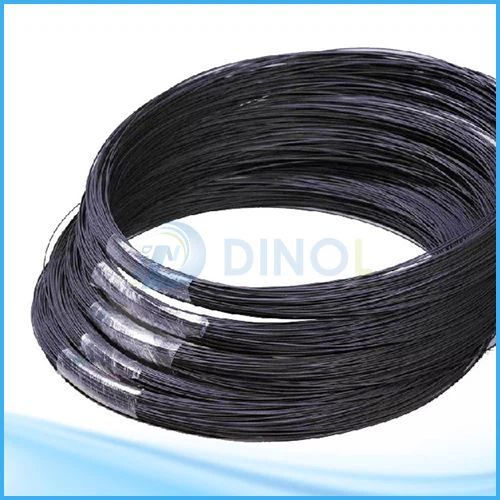

- Cathodic Protection: MMO Titanium Wire is commonly used as an anode material in cathodic protection systems to protect metal structures from corrosion. It is particularly suitable for use in seawater, soil, and other aggressive environments. You can find more information about MMO Titanium Wire Anode for Cathodic Protection.
- Industrial Use: MMO Titanium Wire is also used in various industrial applications, such as electroplating, electrolysis, and water treatment. It can be used as an anode in electroplating processes to deposit metal coatings on substrates, or as a catalyst in electrolysis reactions to produce chemicals and gases. For more details on MMO Titanium Wire Anode for Industrial Use.
- Other Applications: MMO Titanium Wire can also be used in other applications, such as biomedical devices, aerospace components, and marine structures. Its high strength, lightweight, and corrosion resistance make it an ideal material for these applications. You can explore more about MMO Titanium Wire.
Conclusion
In conclusion, MMO Titanium Wire is generally considered to be resistant to stress corrosion cracking due to its high corrosion resistance, excellent mechanical properties, and the protective nature of the mixed metal oxide coating. However, the resistance of the wire to SCC can be affected by several factors, including the coating composition, thickness, surface finish, and environmental conditions. To ensure the maximum resistance of MMO Titanium Wire to SCC, it is important to carefully consider these factors during the manufacturing and application process.
If you are interested in purchasing MMO Titanium Wire for your specific application, I encourage you to contact us for more information. Our team of experts can provide you with detailed technical specifications, product recommendations, and pricing information. We are committed to providing high-quality products and excellent customer service, and we look forward to working with you to meet your needs.
References
- Fontana, M. G., & Greene, N. D. (1967). Corrosion Engineering. McGraw-Hill.
- Uhlig, H. H., & Revie, R. W. (1985). Corrosion and Corrosion Control. Wiley.
- Roberge, P. R. (2006). Corrosion Engineering Handbook. McGraw-Hill.