

How to etch Titanium Anode Wire?
Jun 26, 2025
Etching titanium anode wire is a crucial process in the production and application of these high - performance materials. As a supplier of Titanium Anode Wire, I'm here to share in - depth knowledge about how to etch titanium anode wire, its significance, and the related applications.
Why Etch Titanium Anode Wire?
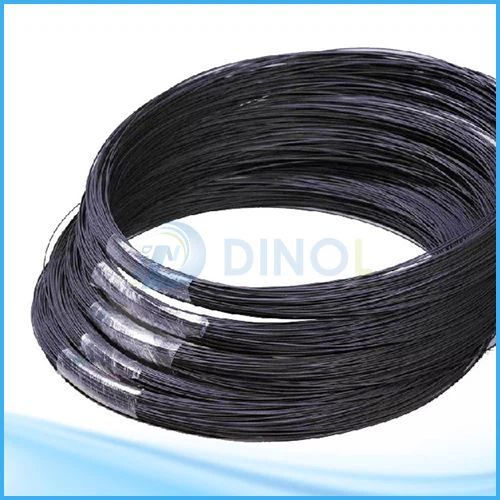
Titanium anode wire has excellent corrosion resistance, high strength - to - weight ratio, and good electrical conductivity. However, for many applications, a smooth surface of the wire may not be sufficient. Etching is used to create a rough and porous surface on the titanium anode wire. This increased surface area enhances the electro - catalytic activity of the anode. When the wire is used in electrochemical processes, a larger surface area allows for more efficient electron transfer, improving the overall performance of the anode.

Preparation Before Etching
- Material Selection: Ensure that the titanium anode wire you select meets the required specifications. Different grades of titanium have different chemical compositions and properties, which can affect the etching process. For example, commercially pure titanium (CP Ti) and titanium alloys may require different etching parameters.
- Cleaning: Before etching, the wire must be thoroughly cleaned to remove any contaminants such as grease, dirt, or oxide layers on the surface. A common cleaning method is to use a degreasing agent, followed by rinsing with deionized water. Ultrasonic cleaning can also be employed to ensure a more thorough cleaning.
Etching Methods
Chemical Etching
Chemical etching is one of the most commonly used methods for etching titanium anode wire.
- Etchant Selection: Hydrofluoric acid (HF) and nitric acid (HNO₃) mixtures are often used as etchants for titanium. The ratio of HF to HNO₃ can vary depending on the desired etching rate and surface finish. For example, a typical mixture might be 10% HF and 30% HNO₃ in water. The reaction between titanium and the etchant can be described by the following chemical equations:
- Titanium reacts with hydrofluoric acid: (Ti + 6HF=H_2[TiF_6]+2H_2\uparrow)
- The nitric acid in the mixture helps to control the reaction rate and prevent the formation of a passive oxide layer on the titanium surface.
- Etching Process:
- Immerse the cleaned titanium anode wire in the etchant solution. The temperature and time of immersion are critical parameters. Generally, the etching temperature can range from room temperature to about 60°C. Higher temperatures can increase the etching rate, but they also need to be carefully controlled to avoid over - etching.
- The immersion time depends on the desired surface roughness and the thickness of the material to be removed. For example, if a relatively light etching is required, the immersion time may be a few minutes, while for a more aggressive etching, it could be up to half an hour or more.
- After etching, the wire should be immediately removed from the etchant and rinsed thoroughly with deionized water to stop the etching reaction and remove any residual etchant.
Electrochemical Etching
Electrochemical etching is another effective method for etching titanium anode wire.
- Electrolyte Selection: A suitable electrolyte is required for electrochemical etching. For titanium, a sulfuric acid - based electrolyte is often used. For example, a 10 - 20% sulfuric acid solution can be used as the electrolyte.
- Electrochemical Setup:
- Set up an electrochemical cell with the titanium anode wire as the anode and a suitable cathode, such as a platinum electrode.
- Apply a direct current (DC) voltage between the anode and the cathode. The voltage and current density are important parameters. The current density can range from a few milliamperes per square centimeter to tens of milliamperes per square centimeter, depending on the specific requirements.
- The electrochemical reaction at the anode (titanium wire) can be described as the oxidation of titanium, where titanium atoms lose electrons and dissolve into the electrolyte.
- Similar to chemical etching, after the electrochemical etching process, the wire needs to be rinsed thoroughly with deionized water.
Post - Etching Treatment
- Neutralization: If the wire has been etched using an acidic etchant, it is necessary to neutralize any residual acid on the surface. A dilute sodium hydroxide (NaOH) solution can be used for neutralization.
- Passivation: After neutralization, passivation can be carried out to improve the corrosion resistance of the etched titanium anode wire. A passivation solution containing nitric acid can be used. Immerse the wire in the passivation solution for a certain period of time, followed by rinsing with deionized water.
Applications of Etched Titanium Anode Wire
- Industrial Use: The etched titanium anode wire is widely used in industrial electrochemical processes. For example, in the chlor - alkali industry, it can be used as an anode in electrolytic cells for the production of chlorine and caustic soda. The increased surface area of the etched wire improves the efficiency of the electrolysis process. You can learn more about MMO Titanium Wire Anode for Industrial Use.
- Cathodic Protection: In cathodic protection systems, etched titanium anode wire can be used to protect metal structures from corrosion. The enhanced electro - catalytic activity of the etched wire ensures a more effective protection of the cathode. More details about MMO Titanium Wire Anode for Cathodic Protection are available.
- Powered Titanium Water Heater Anode Rod: Etched titanium anode wire can also be used in water heaters as an anode rod. It helps to prevent the corrosion of the water heater tank and extends its service life. Check out Powered Titanium Water Heater Anode Rod for more information.
Quality Control
During the etching process, quality control is essential to ensure the consistency and performance of the etched titanium anode wire.
- Surface Inspection: Use techniques such as scanning electron microscopy (SEM) to examine the surface morphology of the etched wire. The surface should have a uniform roughness and porosity as required by the application.
- Electrochemical Performance Testing: Conduct electrochemical tests such as cyclic voltammetry or potentiostatic measurements to evaluate the electro - catalytic activity and corrosion resistance of the etched wire.
Conclusion
Etching titanium anode wire is a complex but important process that can significantly enhance the performance of the wire in various applications. As a supplier of Titanium Anode Wire, we are committed to providing high - quality etched titanium anode wire products. If you are interested in our products or have any questions about the etching process, feel free to contact us for further discussion and potential procurement. We are looking forward to collaborating with you to meet your specific needs.
References
- "Titanium: A Technical Guide" by John R. Davis.
- "Electrochemical Engineering" by Carl Wagner.
- Research papers on titanium etching and anode applications in journals such as "Journal of Electrochemical Society".