

How does the installation distance between MMO Ti Linear Anodes affect the protection effect?
Jun 17, 2025
In the field of corrosion protection, impressed current cathodic protection (ICCP) systems play a crucial role in safeguarding metal structures from the detrimental effects of corrosion. Among the various anode materials used in ICCP systems, MMO Ti Linear Anodes have gained significant popularity due to their excellent performance, durability, and versatility. As a leading supplier of MMO Ti Linear Anodes, I have witnessed firsthand the importance of proper installation distance in achieving optimal protection results. In this blog post, I will delve into the relationship between the installation distance of MMO Ti Linear Anodes and the protection effect, providing valuable insights for engineers, corrosion experts, and anyone involved in corrosion protection projects.
Understanding MMO Ti Linear Anodes
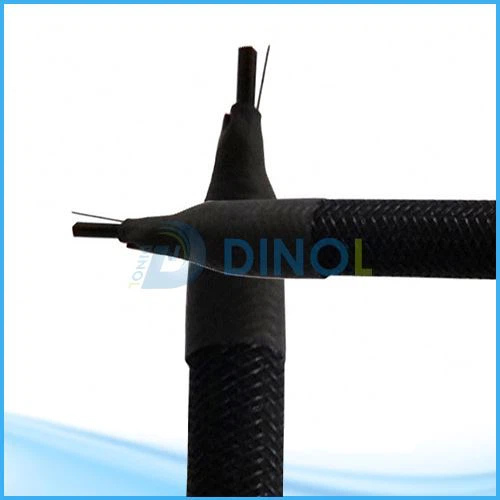
MMO Ti Linear Anodes are made of titanium substrate coated with mixed metal oxide (MMO) catalysts. The titanium substrate provides mechanical strength and corrosion resistance, while the MMO coating enhances the anode's electrocatalytic activity, allowing for efficient generation of protective current. These anodes are available in various configurations, including wires, ribbons, and rods, making them suitable for a wide range of applications, such as buried pipelines, offshore platforms, and reinforced concrete structures.
One of the key advantages of MMO Ti Linear Anodes is their long service life. The MMO coating is highly stable and resistant to chemical attack, ensuring consistent performance over an extended period. Additionally, these anodes have a low consumption rate, which means they require less frequent replacement compared to other anode materials. This not only reduces maintenance costs but also minimizes downtime associated with anode replacement.
The Role of Installation Distance in Cathodic Protection
The installation distance between MMO Ti Linear Anodes and the protected structure is a critical factor that can significantly impact the effectiveness of the cathodic protection system. When an anode is installed, it generates a protective current that flows through the electrolyte (such as soil or water) and onto the surface of the protected structure. The distribution of this current is influenced by several factors, including the anode configuration, the resistivity of the electrolyte, and the distance between the anode and the structure.
If the anodes are installed too close to the protected structure, the current density may be too high in the immediate vicinity of the anodes, leading to overprotection. Overprotection can cause several problems, such as hydrogen embrittlement of the metal, increased corrosion of the anode itself, and the formation of alkaline deposits on the surface of the structure. On the other hand, if the anodes are installed too far away from the protected structure, the current density may be too low to provide adequate protection, resulting in underprotection. Underprotection can leave the structure vulnerable to corrosion, which can lead to structural damage and potential failure.
Factors Affecting the Optimal Installation Distance
Determining the optimal installation distance for MMO Ti Linear Anodes requires careful consideration of several factors, including the following:

- Structure Geometry: The shape and size of the protected structure can influence the distribution of the protective current. For example, a large, irregularly shaped structure may require a more complex anode configuration and a greater number of anodes to ensure uniform current distribution.
- Electrolyte Resistivity: The resistivity of the electrolyte plays a crucial role in determining the current distribution. In high-resistivity environments, such as dry soil or poorly conducting water, the current may not travel as far from the anode, requiring closer anode spacing. Conversely, in low-resistivity environments, the current can travel further, allowing for greater anode spacing.
- Anode Configuration: The configuration of the MMO Ti Linear Anodes, such as the type of anode (wire, ribbon, or rod) and the arrangement of the anodes (parallel or series), can also affect the current distribution. For example, a parallel arrangement of anodes may provide more uniform current distribution compared to a series arrangement.
- Desired Protection Level: The level of protection required for the structure will also influence the installation distance. In some cases, a higher level of protection may be necessary to ensure the long-term integrity of the structure, which may require closer anode spacing.
Calculating the Optimal Installation Distance
To determine the optimal installation distance for MMO Ti Linear Anodes, engineers typically use a combination of theoretical calculations and field testing. Theoretical calculations involve using mathematical models to predict the current distribution based on the factors mentioned above. These models can provide a good estimate of the anode spacing required to achieve the desired protection level.
Field testing, on the other hand, involves measuring the actual current distribution in the field using specialized equipment, such as reference electrodes and current meters. This allows engineers to verify the accuracy of the theoretical calculations and make any necessary adjustments to the anode spacing.
In general, the optimal installation distance for MMO Ti Linear Anodes in a buried pipeline application is typically between 10 and 30 meters, depending on the factors mentioned above. For offshore platforms and other large structures, the anode spacing may be greater, ranging from 30 to 100 meters or more.
Case Studies: Impact of Installation Distance on Protection Effect
To illustrate the importance of proper installation distance, let's consider a few case studies:
-
Case Study 1: Buried Pipeline
A pipeline operator installed MMO Ti Linear Anodes at a distance of 5 meters from the pipeline to provide cathodic protection. After a few months, the operator noticed signs of overprotection, such as the formation of alkaline deposits on the pipeline surface and increased corrosion of the anodes. Upon further investigation, it was determined that the anodes were installed too close to the pipeline, resulting in a high current density in the immediate vicinity of the anodes. The operator then repositioned the anodes at a distance of 15 meters from the pipeline, which resolved the overprotection issue and improved the overall performance of the cathodic protection system. -
Case Study 2: Offshore Platform
An offshore platform was equipped with MMO Ti Linear Anodes installed at a distance of 50 meters from the platform legs. However, due to the high resistivity of the seawater in the area, the protective current was not able to reach all parts of the platform legs, resulting in underprotection. The operator decided to install additional anodes at a closer distance to the platform legs, reducing the anode spacing to 20 meters. This increased the current density on the platform legs, providing adequate protection and preventing further corrosion.
Conclusion
In conclusion, the installation distance between MMO Ti Linear Anodes and the protected structure is a critical factor that can significantly impact the effectiveness of the cathodic protection system. Proper installation distance ensures uniform current distribution and prevents overprotection or underprotection, which can lead to various problems, such as corrosion, hydrogen embrittlement, and increased maintenance costs.
As a [Your Company's Position] at [Your Company Name], I highly recommend consulting with a qualified corrosion engineer to determine the optimal installation distance for your specific application. By considering factors such as the structure geometry, electrolyte resistivity, and desired protection level, a corrosion engineer can design a cathodic protection system that provides reliable and long-lasting protection for your valuable assets.
If you are interested in learning more about MMO Ti Linear Anodes or other corrosion protection solutions, please visit our website at [Your Company's Website]. We offer a wide range of high-quality MMO Ti Linear Anode, Polymer Flexible Anode, and MMO Linear Wire Anode products, as well as professional engineering services to help you design and implement an effective cathodic protection system. Contact us today to discuss your project requirements and get a free quote.
References
- Fontana, M. G. (1986). Corrosion Engineering (3rd ed.). McGraw-Hill.
- Jones, D. A. (1996). Principles and Prevention of Corrosion. Prentice Hall.
- National Association of Corrosion Engineers (NACE). (2016). Cathodic Protection Standard Practice (RP0169). NACE International.