

How does a Polymer Flexible Anode work in alternating current environments?
Jan 21, 2026
Hey there! As a supplier of Polymer Flexible Anodes, I often get asked about how these little wonders work, especially in alternating current (AC) environments. So, let's dive right in and break it down in a way that's easy to understand.
First off, what's a Polymer Flexible Anode? Well, it's a type of anode made from conductive polymers. These anodes are super flexible, which means they can be bent, curved, or shaped to fit all sorts of structures. This flexibility makes them a great choice for protecting things like pipelines, storage tanks, and even offshore platforms.
Now, let's talk about AC environments. Alternating current is the type of electricity that we use in our homes and businesses. It's called "alternating" because the direction of the current changes periodically. In an AC environment, the current can cause all sorts of problems for metal structures, like corrosion. That's where our Polymer Flexible Anodes come in.
How Does It Work?
The basic principle behind a Polymer Flexible Anode is pretty simple. It's all about the flow of electrons. In a metal structure, corrosion happens when metal atoms lose electrons and turn into metal ions. This process is called oxidation. The Polymer Flexible Anode acts as a sacrificial anode, which means it gives up its electrons more easily than the metal structure it's protecting.
When the anode is connected to the metal structure, a circuit is formed. The electrons flow from the anode to the metal structure, preventing the metal atoms from losing their electrons and thus preventing corrosion. In an AC environment, things get a bit more complicated because the direction of the current is constantly changing.
The conductive polymer in the anode plays a crucial role here. It has the ability to conduct electricity and also to adapt to the changing direction of the AC current. The polymer contains mobile charge carriers, like ions or electrons, that can move freely within the material. When the AC current changes direction, these charge carriers can quickly adjust their movement to maintain the flow of electrons to the metal structure.
Another important aspect is the coating on the anode. The coating is designed to protect the anode from the environment and also to enhance its performance. It can prevent the anode from being damaged by chemicals or physical forces, and it can also improve the conductivity of the anode.
Advantages in AC Environments
One of the biggest advantages of using a Polymer Flexible Anode in an AC environment is its ability to handle the changing current direction. Unlike some other types of anodes, the Polymer Flexible Anode doesn't get damaged or lose its effectiveness when the current changes. This means it can provide long - term protection for the metal structure.
The flexibility of the anode is also a huge plus. In an AC environment, the metal structures can be complex and have irregular shapes. The Polymer Flexible Anode can be easily installed on these structures, ensuring complete coverage and protection.
It's also relatively easy to maintain. Since it's made of polymer materials, it doesn't require the same level of maintenance as some other anodes. You don't have to worry about things like rusting or cracking as much.
Comparison with Other Anodes
Let's compare our Polymer Flexible Anode with some other popular anodes, like the MMO Linear Wire Anode and the MMO Flexible Anode.
The MMO Linear Wire Anode is made of mixed metal oxide - coated titanium wire. It's a great choice for many applications, but it may not be as flexible as the Polymer Flexible Anode. In an AC environment, the MMO Linear Wire Anode may have some limitations in terms of adapting to the changing current direction.
The MMO Flexible Anode is also flexible, but it's made of a different material. The Polymer Flexible Anode has better chemical resistance in some cases, and it can be more cost - effective.
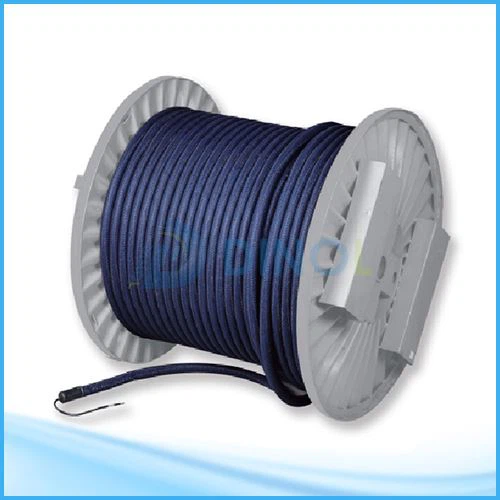

The Conductive Polymer Flexible Anode is similar to our product, but our anodes are designed with the latest technology to provide even better performance in AC environments.
Real - World Applications
In the real world, Polymer Flexible Anodes are used in a wide range of applications. For example, in the oil and gas industry, they are used to protect pipelines from corrosion. Pipelines are often exposed to harsh environments, and the AC current from nearby power lines or electrical equipment can accelerate corrosion. Our Polymer Flexible Anodes can be wrapped around the pipelines, providing a reliable and long - lasting protection.
In the marine industry, they are used to protect offshore platforms. These platforms are constantly exposed to saltwater, which is highly corrosive. The AC current from the electrical systems on the platform can also cause problems. The flexibility of the Polymer Flexible Anode allows it to be installed on the complex structures of the platform, ensuring comprehensive protection.
Contact Us for Purchase
If you're looking for a reliable solution to protect your metal structures in AC environments, our Polymer Flexible Anodes are the way to go. We have a wide range of products to meet your specific needs. Whether you're in the oil and gas industry, the marine industry, or any other industry that requires corrosion protection, we can help.
Don't hesitate to reach out to us if you have any questions or if you're interested in purchasing our Polymer Flexible Anodes. We're here to provide you with the best products and services.
References
- Jones, D. A. (1996). Principles and Prevention of Corrosion. Prentice Hall.
- Uhlig, H. H., & Revie, R. W. (1985). Corrosion and Corrosion Control: An Introduction to Corrosion Science and Engineering. Wiley.