

Can a titanium anode tube be used in a vacuum environment?
Jun 04, 2025
Can a titanium anode tube be used in a vacuum environment? This is a question that often comes up in various industrial and scientific discussions. As a supplier of high - quality Titanium Anode Tubes, I am well - positioned to explore this topic in detail.
Properties of Titanium Anode Tubes
Titanium anode tubes are known for their excellent corrosion resistance, high electrical conductivity, and good mechanical properties. These characteristics make them suitable for a wide range of applications, such as in electrochemical processes, cathodic protection systems, and more.
The corrosion resistance of titanium is due to the formation of a passive oxide layer on its surface. This layer is stable in many environments and protects the underlying metal from further corrosion. In addition, titanium has a relatively low density, which makes it a lightweight yet strong material for anode construction.
Vacuum Environment Characteristics
A vacuum environment is defined by the absence or extremely low pressure of gas molecules. In a high - vacuum environment, the pressure can be as low as 10^(-6) to 10^(-9) Pa. In such an environment, there are several unique physical phenomena that need to be considered.
One of the main issues is outgassing. Any material placed in a vacuum will release adsorbed gases from its surface and internal pores. This can contaminate the vacuum system and affect the performance of other components. Another aspect is the behavior of materials under thermal stress. In a vacuum, heat transfer occurs mainly through radiation, which can lead to different temperature distributions compared to normal atmospheric conditions.
Suitability of Titanium Anode Tubes in a Vacuum Environment
Outgassing
Titanium has relatively low outgassing rates compared to many other metals. The surface oxide layer of titanium helps to reduce the amount of adsorbed gases. However, the manufacturing process of the anode tube can have an impact on outgassing. For example, if the tube is not properly cleaned or heat - treated after manufacturing, it may contain residual lubricants or contaminants that can outgas in a vacuum.
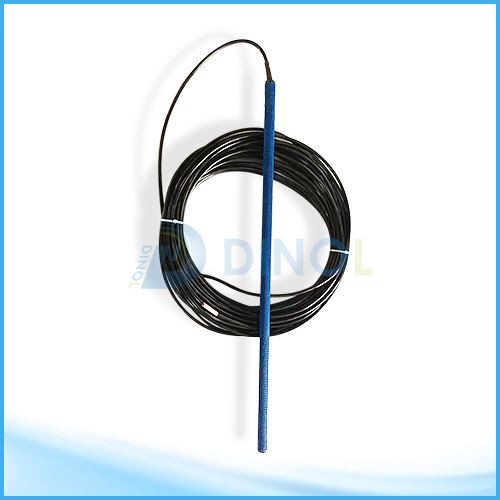
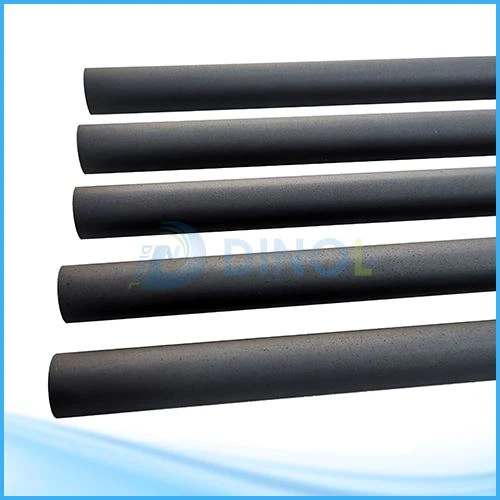
As a supplier, we take great care in the manufacturing process of our Titanium Anode Tube. We use advanced cleaning and heat - treatment techniques to minimize outgassing. Our tubes are also inspected for outgassing levels before shipment to ensure they meet the requirements of vacuum applications.
Electrical Performance
In a vacuum, the electrical conductivity of titanium anode tubes remains relatively stable. Since there are no gas molecules to interfere with the flow of electrons, the electrical performance can even be improved in some cases. However, the connection between the anode tube and the power source needs to be carefully designed to ensure good electrical contact in a vacuum.
Our Anode Tube With Cable is designed with high - quality cables and connectors. The cables are made of materials that are suitable for vacuum environments, and the connectors are designed to provide a reliable electrical connection even under vacuum conditions.
Thermal Performance
As mentioned earlier, heat transfer in a vacuum occurs mainly through radiation. Titanium has a relatively low thermal conductivity compared to some metals, which means that it can act as a thermal insulator to some extent. This can be an advantage in applications where thermal isolation is required.
However, in applications where heat dissipation is necessary, additional heat - transfer mechanisms may need to be considered. For example, we can provide titanium anode tubes with finned structures or heat - pipes to enhance heat transfer in a vacuum.
Applications of Titanium Anode Tubes in Vacuum Environments
Space Applications
In space, the environment is essentially a high - vacuum environment. Titanium anode tubes can be used in space - based electrochemical systems, such as in fuel cells or battery charging systems. Their corrosion resistance and low outgassing rates make them suitable for long - term use in space.
Vacuum Coating Systems
In vacuum coating processes, such as physical vapor deposition (PVD) or chemical vapor deposition (CVD), titanium anode tubes can be used as part of the electrical system. They can provide a stable electrical current for the deposition process, and their low outgassing properties ensure the quality of the coating.
Special Considerations for Different Types of Titanium Anode Tubes
MMO Titanium Anode Tube
MMO (Mixed Metal Oxide) titanium anode tubes are a special type of titanium anode tube. The MMO coating on the surface of the tube provides enhanced electrochemical performance. In a vacuum environment, the MMO coating needs to be carefully evaluated for its outgassing and stability.
The MMO coating may contain small amounts of volatile components that can outgas in a vacuum. Our MMO Titanium Anode Tube is designed with a special MMO coating that has been optimized for vacuum applications. We have conducted extensive tests to ensure the stability and performance of the MMO coating in a vacuum environment.
Conclusion
In conclusion, titanium anode tubes can be used in a vacuum environment with proper design and manufacturing. Their low outgassing rates, stable electrical performance, and suitable thermal properties make them a viable option for many vacuum applications.
As a leading supplier of titanium anode tubes, we have the expertise and experience to provide high - quality products for vacuum applications. Whether you are working on a space project, a vacuum coating system, or any other application that requires titanium anode tubes in a vacuum environment, we can offer customized solutions to meet your specific needs.
If you are interested in purchasing titanium anode tubes for your vacuum applications, please feel free to contact us for further discussion and procurement. We are committed to providing the best products and services to our customers.
References
- "Handbook of Vacuum Physics", edited by A. Roth, Elsevier, 2012.
- "Titanium: A Technical Guide", by J. C. Williams, ASM International, 2015.
- "Electrochemical Engineering Principles", by M. A. Hickner, John Wiley & Sons, 2016.