

Can a Polymer Flexible Anode be used in shipbuilding?
Jun 12, 2025
Can a Polymer Flexible Anode be used in shipbuilding?
As a supplier of Polymer Flexible Anodes, I've often been asked about the viability of using these anodes in shipbuilding. This blog post aims to delve into the technical aspects, benefits, and challenges of incorporating Polymer Flexible Anodes in the shipbuilding industry.
Understanding Polymer Flexible Anodes
Polymer Flexible Anodes are a type of sacrificial anode that offers several advantages over traditional anodes. These anodes are made of a polymer material that is flexible, lightweight, and highly conductive. The flexibility of these anodes allows them to be easily shaped and installed in complex geometries, which is particularly useful in shipbuilding where space is often limited and the hull has irregular shapes.
The conductive polymer used in these anodes provides a stable and uniform current distribution, which is crucial for effective cathodic protection. Cathodic protection is a technique used to prevent corrosion of metal structures by making them the cathode of an electrochemical cell. In the case of ships, the hull is the cathode, and the anode is designed to corrode sacrificially to protect the hull.
Technical Suitability for Shipbuilding
One of the key requirements for an anode in shipbuilding is its ability to provide long - term protection in a harsh marine environment. Polymer Flexible Anodes have excellent chemical resistance to seawater, which contains a high concentration of salts and other corrosive substances. They can withstand the continuous exposure to seawater, wave action, and the mechanical stresses associated with ship movement.

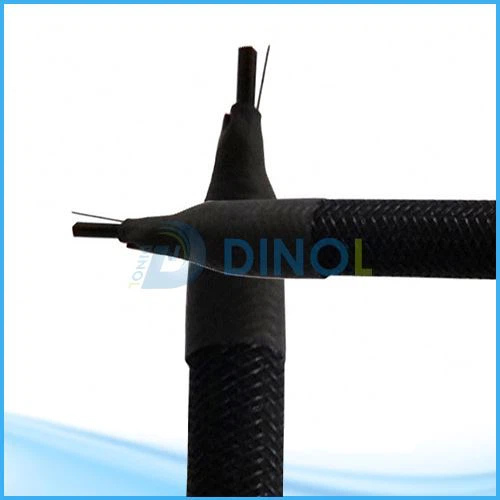
The uniform current distribution provided by Polymer Flexible Anodes ensures that all parts of the ship's hull are protected from corrosion. This is especially important in areas where traditional anodes may not be able to reach or provide adequate protection, such as in the bilges, ballast tanks, and around complex structural components.
Another advantage is the ease of installation. Unlike rigid anodes, Polymer Flexible Anodes can be bent, wrapped, or cut to fit the specific shape of the ship's hull. This reduces the installation time and labor costs, which is a significant factor in shipbuilding projects.
Comparing with Other Anode Types
When comparing Polymer Flexible Anodes with other types of anodes commonly used in shipbuilding, such as MMO Ti Linear Anode and traditional sacrificial anodes, there are several notable differences.
MMO Ti Linear Anodes are made of a titanium substrate coated with a mixed metal oxide. They are known for their high current output and long service life. However, they are relatively rigid and may not be suitable for complex geometries. In contrast, Polymer Flexible Anodes offer greater flexibility and can be installed in areas where MMO Ti Linear Anodes cannot be easily placed.
Traditional sacrificial anodes, such as zinc or aluminum anodes, are widely used in shipbuilding. While they are effective in providing cathodic protection, they have a limited service life and need to be replaced regularly. Polymer Flexible Anodes, on the other hand, can provide long - term protection with less frequent replacement, which reduces the overall maintenance costs of the ship.
Challenges and Solutions
Despite their many advantages, there are some challenges associated with using Polymer Flexible Anodes in shipbuilding. One of the main challenges is the cost. Polymer Flexible Anodes are generally more expensive than traditional sacrificial anodes. However, when considering the long - term savings in terms of maintenance and replacement costs, the overall cost - effectiveness of Polymer Flexible Anodes becomes more apparent.
Another challenge is the need for proper installation and maintenance. To ensure the optimal performance of Polymer Flexible Anodes, they need to be installed correctly and monitored regularly. This requires trained personnel and proper installation procedures. As a supplier, we provide comprehensive technical support and training to our customers to ensure the correct installation and maintenance of our Polymer Flexible Anodes.
Case Studies and Real - World Applications
There have been several successful applications of Polymer Flexible Anodes in shipbuilding. For example, in some high - performance yachts, Polymer Flexible Anodes have been used to provide corrosion protection in areas where traditional anodes were not effective. The flexibility of these anodes allowed them to be installed in tight spaces around the yacht's complex hull design, providing uniform protection and extending the service life of the hull.
In commercial ships, Polymer Flexible Anodes have been used in ballast tanks to prevent corrosion. The uniform current distribution provided by these anodes has significantly reduced the corrosion rate in ballast tanks, which are prone to corrosion due to the presence of seawater and the cyclic filling and emptying of the tanks.
The Role of Cathodic Protection Cable
In a cathodic protection system, the Cathodic Protection Cable plays a crucial role in connecting the Polymer Flexible Anode to the ship's hull. The cable needs to have high conductivity and good corrosion resistance to ensure the efficient transfer of current. Our company offers high - quality Cathodic Protection Cables that are specifically designed for use with our Polymer Flexible Anodes. These cables are made of materials that can withstand the harsh marine environment and provide reliable electrical connection.
Conclusion and Call to Action
In conclusion, Polymer Flexible Anodes have significant potential for use in shipbuilding. Their flexibility, chemical resistance, uniform current distribution, and ease of installation make them a viable alternative to traditional anodes. While there are some challenges, such as cost and installation requirements, the long - term benefits in terms of corrosion protection and maintenance savings make them an attractive option for shipbuilders.
If you are involved in shipbuilding or are looking for an effective corrosion protection solution for your ships, we invite you to contact us to discuss your specific needs. Our team of experts can provide you with detailed information about our Polymer Flexible Anodes and help you determine the best solution for your project.
References
- Jones, D. A. (1996). Principles and Prevention of Corrosion. Prentice Hall.
- Fontana, M. G. (1986). Corrosion Engineering. McGraw - Hill.
- Uhlig, H. H., & Revie, R. W. (1985). Corrosion and Corrosion Control. Wiley - Interscience.