

Can a Polymer Flexible Anode be used in desalination plants?
Jul 28, 2025
Can a Polymer Flexible Anode be used in desalination plants?
In the face of the global water scarcity crisis, desalination plants have emerged as a crucial solution to meet the growing demand for fresh water. These facilities play a vital role in converting seawater or brackish water into potable water, providing a reliable source of water for communities, industries, and agriculture. As a supplier of Polymer Flexible Anodes, I am often asked whether these anodes can be effectively used in desalination plants. In this blog post, I will explore the potential of Polymer Flexible Anodes in desalination applications, examining their properties, advantages, and limitations.
Understanding Desalination Processes and the Role of Anodes
Desalination plants typically use one of two main processes: reverse osmosis (RO) or thermal desalination. Reverse osmosis is the most widely used method, which involves forcing water through a semi - permeable membrane to remove salts and other impurities. Thermal desalination, on the other hand, uses heat to evaporate water, leaving behind the salts, and then condenses the vapor to produce fresh water.
In both processes, the materials used in the desalination equipment are exposed to highly corrosive environments due to the high salt content of the feed water. To protect the metal components of the desalination plants from corrosion, cathodic protection is often employed. Cathodic protection is a technique used to control the corrosion of a metal surface by making it the cathode of an electrochemical cell. Anodes are an essential part of the cathodic protection system, as they provide the necessary electrical current to protect the metal structures.
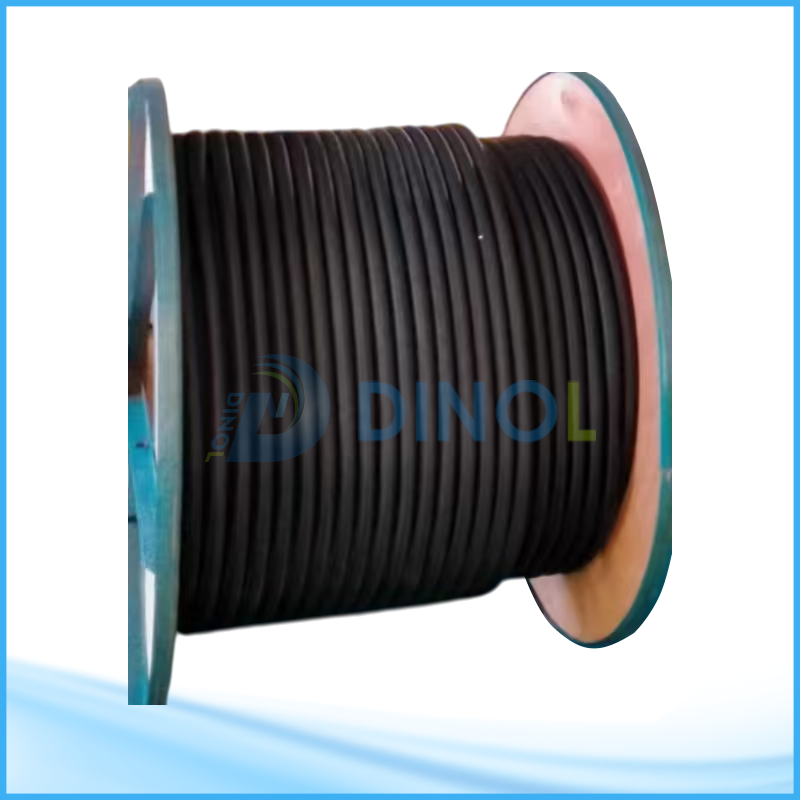

Polymer Flexible Anodes: An Overview
Polymer Flexible Anodes are a type of anode that offers several unique advantages over traditional rigid anodes. These anodes are made of a conductive polymer material that can be easily bent and shaped to fit complex geometries. The Polymer Flexible Anode is lightweight, easy to install, and can be customized to meet the specific requirements of different applications.
One of the key features of Polymer Flexible Anodes is their high flexibility. This allows them to be installed in areas where rigid anodes cannot be used, such as around pipes, tanks, and other irregularly shaped structures. Additionally, the polymer material is resistant to many chemicals, making it suitable for use in harsh environments, including desalination plants.
Advantages of Using Polymer Flexible Anodes in Desalination Plants
1. Easy Installation
Desalination plants have complex structures with numerous pipes, valves, and other components. Installing traditional rigid anodes in these areas can be a time - consuming and labor - intensive process. Polymer Flexible Anodes, on the other hand, can be easily wrapped around pipes and other structures, reducing the installation time and cost. Their flexibility also allows for easy adaptation to different shapes and sizes, ensuring a more efficient installation process.
2. Uniform Current Distribution
In a cathodic protection system, uniform current distribution is crucial for effective corrosion protection. The flexible nature of Polymer Flexible Anodes allows them to conform closely to the surface of the protected structure, resulting in a more uniform current distribution. This helps to prevent localized corrosion and ensures that all parts of the metal structure are adequately protected.
3. Chemical Resistance
The feed water in desalination plants contains a high concentration of salts and other chemicals, which can be highly corrosive. Polymer Flexible Anodes are resistant to many of these chemicals, providing long - term protection against corrosion. This chemical resistance also means that the anodes have a longer service life, reducing the need for frequent replacements.
4. Cost - Effectiveness
When considering the total cost of ownership, Polymer Flexible Anodes can be a cost - effective solution for desalination plants. Their lower installation cost, longer service life, and reduced maintenance requirements make them an attractive option compared to traditional rigid anodes.
Limitations and Challenges
While Polymer Flexible Anodes offer many advantages, there are also some limitations and challenges that need to be considered when using them in desalination plants.
1. Current Output Capacity
Compared to some traditional anodes, Polymer Flexible Anodes may have a lower current output capacity. In large - scale desalination plants, where a high level of cathodic protection is required, this may limit their use. However, in smaller desalination facilities or in areas where the corrosion rate is relatively low, Polymer Flexible Anodes can still provide adequate protection.
2. Temperature Sensitivity
The performance of Polymer Flexible Anodes can be affected by temperature. In high - temperature environments, such as those found in some thermal desalination processes, the polymer material may degrade over time, reducing the effectiveness of the anode. Careful consideration needs to be given to the operating temperature range when selecting Polymer Flexible Anodes for desalination applications.
Comparing with Other Types of Anodes
Another type of anode commonly used in cathodic protection is the MMO Flexible Anode. MMO (Mixed Metal Oxide) anodes are known for their high current output and long service life. However, they are more expensive than Polymer Flexible Anodes and may not be as easy to install in complex geometries.
Flexible Anode For Cathodic Protection also comes in different forms, and each has its own set of advantages and disadvantages. When choosing an anode for a desalination plant, factors such as the size of the plant, the type of desalination process, the corrosion rate, and the budget need to be taken into account.
Conclusion
In conclusion, Polymer Flexible Anodes have the potential to be used effectively in desalination plants. Their ease of installation, uniform current distribution, chemical resistance, and cost - effectiveness make them a viable option for protecting the metal components of desalination equipment from corrosion. However, their lower current output capacity and temperature sensitivity need to be carefully considered, especially in large - scale or high - temperature desalination applications.
If you are involved in the operation or construction of a desalination plant and are interested in exploring the use of Polymer Flexible Anodes, I encourage you to contact us for more information. We can provide you with detailed technical specifications, installation guidelines, and cost estimates. Our team of experts is ready to work with you to find the best cathodic protection solution for your specific needs. Let's work together to ensure the long - term reliability and efficiency of your desalination plant.
References
- Fontana, M. G., & Greene, N. D. (1967). Corrosion engineering. McGraw - Hill Book Company.
- Uhlig, H. H., & Revie, R. W. (1985). Corrosion and corrosion control: an introduction to corrosion science and engineering. Wiley - Interscience.
- Melchers, R. E. (1999). Corrosion of steel in concrete: understanding, investigation and repair. Spon Press.