

Can a Polymer Flexible Anode be used in acidic environments?
May 30, 2025
In the realm of corrosion protection, the application of anodes is a well - established practice. Among the diverse range of anodes available, polymer flexible anodes have emerged as a compelling solution due to their unique properties such as flexibility and adaptability. One critical question that often arises in the minds of professionals and end - users alike is: Can a Polymer Flexible Anode be used in acidic environments? As a supplier of Polymer Flexible Anodes, I am well - positioned to provide in - depth insights into this important topic.
Understanding Polymer Flexible Anodes
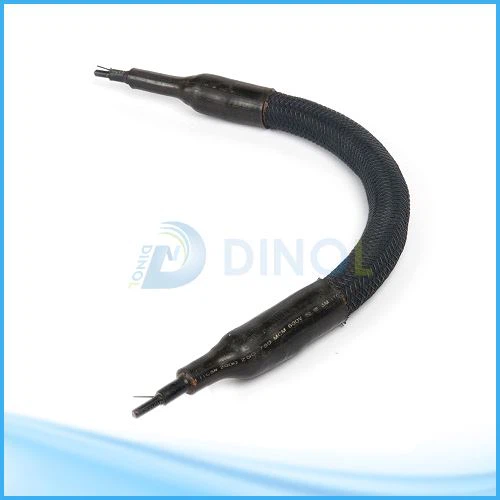
Polymer flexible anodes are a specialized type of anode that combines the conductivity required for anodic protection with the flexibility to conform to irregular surfaces. There are different types of polymer flexible anodes available in the market, such as Piggyback Anode, Conductive Polymer Flexible Anode, and MMO Flexible Anode.
The conductive polymer in these anodes acts as the medium through which the protective current is distributed. This property makes them ideal for use in applications where traditional rigid anodes would be difficult to install, such as in pipelines with complex geometries or on the surfaces of irregularly shaped structures.
Characteristics of Acidic Environments
Acidic environments are characterized by a low pH, typically below 7. These environments can have a wide range of acid concentrations and may contain various aggressive substances. Common sources of acidic environments include industrial wastewaters, mining sites, soil in certain geographical areas with high sulfuric acid content, and the insides of some chemical storage tanks.
Acids can have a corrosive effect on materials. They react with metals by donating protons, which can lead to the dissolution of the anodic material. In the context of anodes, this corrosion can reduce the anode's effectiveness over time, shorten its service life, and potentially compromise the overall corrosion protection system.
Suitability of Polymer Flexible Anodes in Acidic Environments
When evaluating whether polymer flexible anodes can be used in acidic environments, several factors need to be considered.
Chemical Resistance
One of the primary advantages of polymer flexible anodes is their chemical resistance. The polymers used in these anodes are carefully selected and formulated to withstand a variety of chemical attacks. Many polymers are inherently resistant to mild acids. For example, polymers with high - density cross - linking structures are less likely to be penetrated by acid molecules, providing a protective barrier for the underlying conductive materials.

However, it's important to note that the level of chemical resistance varies among different polymer types. Some high - performance polymers can withstand relatively high concentrations of certain acids, such as weak organic acids. But in more aggressive acidic environments, such as those containing strong mineral acids like hydrochloric or sulfuric acid, the anode's performance may degrade over time.
Conductivity Maintenance
The conductivity of polymer flexible anodes is crucial for their proper functioning in a corrosion protection system. In an acidic environment, the acid can potentially affect the conductive polymer's electrical properties. For instance, if the acid reacts with the polymer and changes its molecular structure, it can disrupt the flow of electrons and reduce the anode's ability to deliver the required protective current.
On the other hand, well - designed polymer flexible anodes are engineered to maintain a stable conductivity even in the presence of some acid. The conductive fillers within the polymer matrix are selected such that they are less susceptible to acid - induced degradation. Additionally, some anodes are treated with surface - passivating agents that can help preserve the conductivity by preventing direct contact between the acid and the conductive sites.
Physical Integrity
Acids can also have an impact on the physical integrity of polymer flexible anodes. Over time, acid exposure may cause swelling, cracking, or embrittlement of the polymer. Swelling can deform the anode, leading to improper installation and uneven current distribution. Cracking and embrittlement can ultimately result in the mechanical failure of the anode, rendering it ineffective for corrosion protection.
However, through proper design and the use of additives, polymer flexible anodes can be made more resistant to such physical changes. For example, ultraviolet (UV) stabilizers and anti - oxidants are often incorporated into the polymer formulation to enhance its long - term physical stability in harsh environments, including those with acidic components.
Case Studies
To illustrate the real - world performance of polymer flexible anodes in acidic environments, let's look at some case studies.
In a mining operation, a pipeline transporting acidic mine water was protected using polymer flexible anodes. The water had a pH of approximately 3, indicating a moderately acidic environment. Over a period of several years, the anodes maintained their performance. The corrosion rate of the pipeline was significantly reduced, and regular inspections showed that the polymer flexible anodes had retained their physical integrity and conductivity, despite being continuously exposed to the acidic water.
In another case, a chemical storage tank containing a weak organic acid solution was equipped with polymer flexible anodes for internal corrosion protection. After several months of operation, the anodes showed only minor signs of degradation, and the corrosion protection system remained effective. This demonstrates that, under the right conditions, polymer flexible anodes can provide reliable corrosion protection in acidic environments.
Mitigation Strategies
If polymer flexible anodes are to be used in acidic environments, certain mitigation strategies can be employed to enhance their performance and longevity.
pH Monitoring
Regular pH monitoring of the acidic environment is essential. By continuously monitoring the pH level, operators can detect any significant changes early on. If the pH drops to a level that may pose a threat to the anode's performance, appropriate actions can be taken, such as adjusting the anode's output current or increasing the frequency of inspections.
Coating and Encapsulation
Applying a protective coating to the polymer flexible anode can provide an additional layer of protection against acid attack. The coating should be chemically resistant to the specific acid present in the environment and should also be able to adhere well to the anode surface. Encapsulating the anode in a durable, acid - resistant material can also shield it from direct acid contact.
Anode Selection and Customization
When dealing with acidic environments, it's crucial to select the right type of polymer flexible anode. Based on the specific acid type and concentration in the environment, different anode formulations can be chosen. In some cases, custom - made polymer flexible anodes can be developed to meet the unique requirements of a particular application.
Conclusion
In summary, polymer flexible anodes can be used in acidic environments, but with certain considerations. Their chemical resistance, conductivity maintenance capabilities, and physical integrity depend on factors such as the type of polymer used, the nature of the acid, and the application conditions.
While there are challenges associated with using these anodes in acidic environments, through proper design, material selection, and mitigation strategies, they can provide effective corrosion protection. The case studies we've examined show that, in real - world scenarios, polymer flexible anodes can perform satisfactorily in moderately acidic conditions.
If you're facing a corrosion protection challenge in an acidic environment and are considering using polymer flexible anodes, I encourage you to reach out to discuss your specific requirements. Our team of experts can provide detailed advice on anode selection, installation, and long - term maintenance. Let's work together to find the best corrosion protection solution for your project.
References
- Jones, D. A. "Principles and Prevention of Corrosion." Pearson Education, 2010.
- Fontana, M. G. "Corrosion Engineering." McGraw - Hill, 1986.
- Revie, R. W. "Uhlig's Corrosion Handbook." Wiley, 2011.