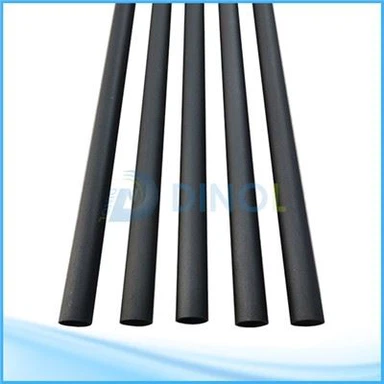
MMO Titanium Mesh Strip Anode (Mixed Metal Oxide Coated Titanium Anode Mesh)
May 18, 2026
Product Name: MMO Titanium Mesh Strip Anode (Mixed Metal Oxide Coated Titanium Anode Mesh)
Product Structure:
Substrate: Commercially pure titanium (TA1/TA2)
Coating: Iridium-tantalum or Ruthenium-iridium mixed metal oxide
Mesh pattern: Diamond or rectangular openings, width customizable (typically 100mm–1000mm), coil length up to 50 meters
Specifications:
Mesh opening: Common sizes 3×5mm, 5×10mm
Rib thickness: 0.5–1.2mm
Coating loading: 5–15g/m²
Design current density: 50–150A/m²
Design service life: 10–20 years (depending on environment)
Application Range

Cathodic protection of tank bottom plates – Internal or external bottom of crude oil, product, and chemical storage tanks
Buried steel pipelines – Large pipeline networks, station yard area protection
Reinforced concrete structures – Wharfs, bridges, parking garages (rebar protection)
Seawater or freshwater environments – Power plant circulating water pipelines, dry docks, sluice gates
Retrofit of aging structures – Secondary cathodic protection after failure of original systems
Practical Problems Solved Compared to Conventional Anodes
Problem 1: Premature failure of anodes in chlorine-rich environments
Many real-world sites involve wastewater, seawater, or high-salinity soil. Ordinary high-silicon cast iron or flexible anodes rapidly experience coating peeling due to chlorine evolution. MMO titanium mesh exhibits stable polarization curves in such environments. At a municipal sewage lift station in southern China, the mesh was retrieved after 11 years of service – the titanium substrate remained intact with only minor coating consumption.
Problem 2: Difficult on-site cutting and connection
Conventional strip anodes require complex field joints after cutting – poor joints lead to current leakage or open circuits. Titanium mesh can be cut with ordinary tin snips. The cut ends require no special treatment; mechanical crimping or titanium welding wire works directly. Field crews consistently note this as a practical advantage.
Problem 3: Unstable output due to dry-wet cycling in soil
Seasonal wet-dry cycles cause resistance fluctuations in certain anodes, making protection current erratic. The MMO coating has inherently low oxygen overpotential – even as soil resistivity changes by orders of magnitude, output voltage variation remains significantly smaller than with graphite or scrap steel anodes. A pumping station in northwest China switched to MMO titanium mesh and went from two rectifier adjustments per rainy season to none in three years.
Problem 4: Thin or already-corroded structures cannot tolerate high current injection
Some tank bottom plates have undergone wall thinning or are at risk of hydrogen damage. Traditional anodes risk exacerbating hydrogen embrittlement by forcing high current. Titanium mesh acts as a distributed anode – it splits the total current into hundreds of tiny points. Single-point current density can be kept below 0.5A/m², which works well for aging structures.
Problem 5: Cathodic protection dead zones
Complex geometries – such as tank annular plates or pipe penetrations through walls – are hard to reach with rod anodes, resulting in poor current distribution. Titanium mesh is flexible and thin, conforming directly to the protected surface and covering dead zones. A refinery in northeast China had chronically underprotected tank annular plates; after installing two overlapping layers of titanium mesh, the potential met the target.
Selection Notes – What It Does Not Suit
Strong acids (pH < 3) shorten coating life
Locations subject to direct mechanical crushing (e.g., vehicle traffic) require protective covers
Extremely high resistivity soils (>50,000 Ω·cm) like dry sand/gravel benefit from conductive backfill
Field-Proven Installation Practice
Many users lay the titanium mesh beneath tank bottoms with coke breeze or conductive grout as backfill. This buffers mechanical pressure and lowers contact resistance. In practice, prefabricating the cable lug and titanium-to-copper transition joint in the shop eliminates the need to bring a welder on-site.