

What is the radiation resistance of MMO Titanium Anode Wire?
Jun 25, 2025
Radiation resistance is a crucial parameter in the performance evaluation of MMO (Mixed Metal Oxide) Titanium Anode Wire. As a leading supplier of MMO Titanium Anode Wire, we understand the significance of this characteristic and its impact on various applications. In this blog post, we will delve into the concept of radiation resistance of MMO Titanium Anode Wire, its influencing factors, and its importance in practical use.
Understanding Radiation Resistance in MMO Titanium Anode Wire
Radiation resistance in the context of MMO Titanium Anode Wire refers to the ability of the anode to withstand the effects of radiation, which can include electromagnetic radiation, ionizing radiation, and other forms of energy exposure. This resistance is essential as it ensures the stability and longevity of the anode in environments where radiation is present.
MMO Titanium Anode Wire is widely used in cathodic protection systems, where it plays a vital role in preventing corrosion of metal structures. In some applications, such as in nuclear power plants, offshore platforms exposed to cosmic radiation, or industrial settings with high - energy sources, the anode may be subjected to significant radiation. Radiation can cause changes in the physical and chemical properties of the anode material, which may lead to a decrease in its performance over time.
Factors Affecting the Radiation Resistance of MMO Titanium Anode Wire
Material Composition
The base material of MMO Titanium Anode Wire is titanium, which has excellent corrosion resistance and mechanical properties. However, the mixed metal oxide coating on the titanium substrate is what gives the anode its unique electrochemical properties. The type and proportion of metal oxides in the coating can significantly affect the radiation resistance. For example, certain metal oxides may have better radiation - absorbing or - scattering capabilities, which can protect the underlying titanium substrate from radiation damage.
Coating Thickness
The thickness of the MMO coating on the titanium wire also plays a role in radiation resistance. A thicker coating can provide more protection against radiation, as it can absorb and dissipate more of the radiation energy before it reaches the titanium substrate. However, an overly thick coating may also have some drawbacks, such as reduced electrical conductivity and increased brittleness. Therefore, an optimal coating thickness needs to be determined to balance radiation resistance and other performance requirements.
Manufacturing Process
The manufacturing process of MMO Titanium Anode Wire can influence its radiation resistance. High - quality manufacturing processes ensure a uniform and dense MMO coating on the titanium substrate. A uniform coating can distribute the radiation energy more evenly, reducing the risk of localized damage. Additionally, proper heat treatment during the manufacturing process can improve the adhesion between the coating and the substrate, which is important for maintaining the integrity of the anode under radiation exposure.
Importance of Radiation Resistance in Different Applications
Cathodic Protection in Nuclear Facilities
In nuclear power plants, cathodic protection is essential to prevent the corrosion of metal structures, such as storage tanks, pipelines, and reactor components. MMO Titanium Anode Wire used in these facilities must have high radiation resistance. The radiation in nuclear power plants can be extremely high, including gamma rays and neutrons. If the anode does not have sufficient radiation resistance, the radiation can cause the MMO coating to degrade, leading to a decrease in the anode's electrochemical activity and ultimately reducing the effectiveness of the cathodic protection system. This could result in corrosion of the metal structures, which can have serious safety and economic consequences.
Offshore and Marine Applications
Offshore platforms are exposed to cosmic radiation, especially at high latitudes. MMO Titanium Anode Wire used in the cathodic protection of offshore structures needs to withstand this radiation over a long period. The radiation can interact with the anode material, causing changes in its surface properties and electrochemical behavior. A radiation - resistant anode can ensure the long - term stability of the cathodic protection system, reducing the need for frequent anode replacement and maintenance, which is costly and difficult to perform in offshore environments.
Testing and Evaluation of Radiation Resistance
To ensure the quality and performance of MMO Titanium Anode Wire in terms of radiation resistance, various testing methods are employed. One common method is to expose the anode samples to simulated radiation environments in a laboratory setting. The samples are then analyzed for changes in their physical and chemical properties, such as coating integrity, electrical conductivity, and electrochemical activity.
Non - destructive testing techniques, such as X - ray diffraction and scanning electron microscopy, can be used to examine the internal structure and surface morphology of the anode before and after radiation exposure. These techniques can help identify any radiation - induced changes, such as cracking, phase transformations, or coating delamination.
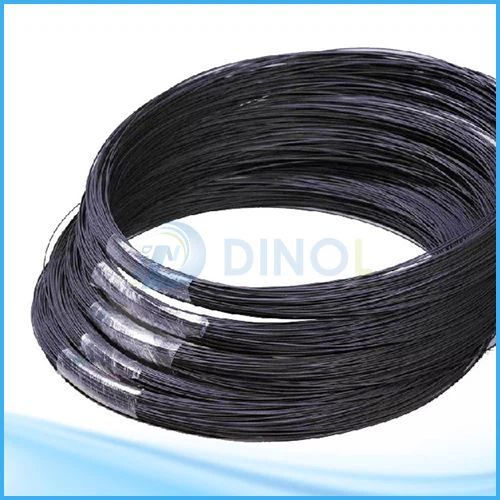

Our Products and Their Radiation Resistance
As a supplier of MMO Titanium Anode Wire, we are committed to providing high - quality products with excellent radiation resistance. Our MMO Titanium Wire Anode for Cathodic Protection is carefully designed and manufactured using advanced processes. We use high - purity titanium as the base material and carefully select the metal oxides for the MMO coating to optimize the radiation resistance.
Our MMO Titanium Wire undergoes strict quality control during the manufacturing process to ensure a uniform and dense coating. We also conduct extensive radiation resistance testing on our products to meet the requirements of different applications. For applications in harsh radiation environments, such as in nuclear facilities, we can provide customized solutions to ensure the long - term performance of the anode.
In addition, our Powered Titanium Water Heater Anode Rod also benefits from our expertise in radiation - resistant anode technology. Although the radiation exposure in water heater applications is relatively low compared to nuclear or offshore applications, our products are designed to have a certain level of radiation resistance to ensure their reliability and longevity.
Conclusion
The radiation resistance of MMO Titanium Anode Wire is a critical factor that affects its performance and durability in various applications. Understanding the factors that influence radiation resistance, such as material composition, coating thickness, and manufacturing process, is essential for producing high - quality anodes. As a supplier, we are dedicated to providing products with excellent radiation resistance to meet the needs of our customers in different industries.
If you are interested in our MMO Titanium Anode Wire products and want to learn more about their radiation resistance or other performance characteristics, please feel free to contact us for procurement and further discussion. We are looking forward to working with you to provide the best solutions for your cathodic protection needs.
References
- Jones, D. A. (1996). Principles and Prevention of Corrosion. Prentice - Hall.
- Fontana, M. G. (1986). Corrosion Engineering. McGraw - Hill.
- Revie, R. W., & Uhlig, H. H. (2008). Uhlig's Corrosion Handbook. Wiley.