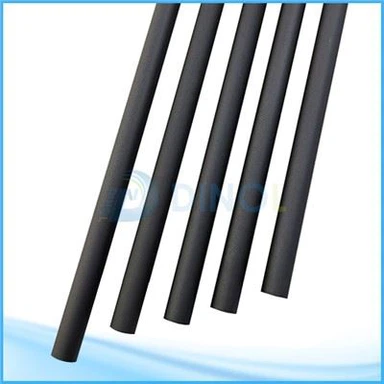
Why MMO Titanium Ribbon Anode With Titanium Conductive Strip Becomes Mainstream For Tank Bottom Cathodic Protection
Aug 25, 2026
Why MMO Titanium Ribbon Anode with Titanium Conductive Strip Becomes Mainstream for Tank Bottom Cathodic Protection
Corrosion‑induced leakage of large crude oil and chemical storage tank bottoms is a critical safety risk for oil‑gas storage facilities. The sand bedding under tanks features high humidity, accumulated salt content and fluctuating soil resistivity. Conventional discrete anodes often cause current shielding, leaving partial tank‑bottom areas under‑protected. Pitting leakage may occur after several years of service, bringing extremely high excavation and maintenance costs.
In modern ICCP impressed current cathodic protection projects, distributed mesh anode systems combining MMO titanium ribbon anodes and titanium conductive strips have become the preferred solution for new‑built tank bottom cathodic protection. Many field engineers mix up their respective functions. The MMO titanium ribbon anode is coated with iridium‑tantalum mixed metal oxide, performing oxygen‑evolution electrochemical reaction and releasing protective current. The titanium conductive strip has no catalytic coating, acting as current collector to deliver current from rectifier evenly to each section of MMO titanium ribbon anode. Cross‑spot‑welded joints form a complete mesh to eliminate current blind zones.
Substrates adopt ASTM B265 Grade1 commercially pure titanium with good ductility. Supplied in continuous coils, they can be cut on‑site. No coke backfill is required, and they are laid directly on tank‑bottom sand bedding, simplifying construction compared with traditional deep well anode beds. Common sizes include MMO titanium ribbon 6.35×0.635 mm, 12.7×0.9 mm. Titanium conductive strip cross‑section is selected according to mesh dimension. Standard coil length is 152 m to minimize field joints and subsequent failure risks.
Proven in numerous real‑world projects, this mesh anode system delivers uniform current distribution over tank bottom, avoiding over‑protection or under‑protection. Its design service life reaches 25‑50 years, matching tank design life with almost no underground maintenance required. Compared with graphite and high‑silicon cast iron anodes, MMO titanium ribbon shows extremely low consumption rate. No massive corrosion by‑products accumulate to block medium passage, preventing continuous voltage rise during long‑term operation.


A common selection mistake is using MMO titanium ribbon anode alone without titanium conductive strip for current collection. For large‑area mesh layout, relying merely on MMO ribbon's conductivity causes remarkable voltage drop over distance. Distant anodes deliver insufficient current and trigger corrosion at tank bottom edges. Titanium conductive strip serves as mesh skeleton to stabilize current output across the whole grid.
This solution applies to new‑build and retrofitting projects of crude oil tanks, product oil tanks, chemical tanks and wastewater tanks. When sourcing, verify titanium grade, MMO thermal‑decomposition coating process and titanium spot‑welding quality to secure long‑term stable performance of mesh anode systems.