

What is the Seebeck coefficient of MMO Titanium Wire?
May 19, 2025
As a supplier of MMO Titanium Wire, I've received numerous inquiries about various aspects of this product. One question that often comes up is, "What is the Seebeck coefficient of MMO Titanium Wire?" In this blog post, I'll delve into this topic, providing you with a comprehensive understanding of the Seebeck coefficient and its relevance to MMO Titanium Wire.
Understanding the Seebeck Effect and Coefficient
The Seebeck effect is a phenomenon in which a temperature difference between two dissimilar electrical conductors or semiconductors produces a voltage difference between the two substances. This effect was discovered by Thomas Johann Seebeck in 1821. The Seebeck coefficient, also known as the thermoelectric power or thermopower, is a measure of the magnitude of the Seebeck effect. It is defined as the ratio of the induced thermoelectric voltage to the temperature difference across the material, and it is typically expressed in microvolts per kelvin (μV/K).
The Seebeck coefficient is a fundamental property of a material that depends on its electronic structure, crystal structure, and temperature. Materials with a high Seebeck coefficient are good candidates for thermoelectric applications, such as thermoelectric generators and thermoelectric coolers.
Seebeck Coefficient of MMO Titanium Wire
MMO Titanium Wire, or Mixed Metal Oxide Titanium Wire, is a specialized product that combines the excellent corrosion resistance of titanium with the catalytic activity of mixed metal oxides. It is widely used in various applications, including MMO Titanium Wire Anode for Industrial Use and MMO Titanium Wire Anode for Cathodic Protection.
The Seebeck coefficient of MMO Titanium Wire is influenced by several factors, including the composition of the mixed metal oxides, the manufacturing process, and the operating conditions. The presence of different metal oxides can alter the electronic properties of the wire, thereby affecting its Seebeck coefficient. Additionally, the manufacturing process can introduce defects and impurities that can also impact the thermoelectric behavior of the material.
In general, the Seebeck coefficient of MMO Titanium Wire is relatively low compared to some other thermoelectric materials. This is because the primary function of MMO Titanium Wire is not thermoelectric conversion but rather its use as an anode in electrochemical applications. However, even a low Seebeck coefficient can have implications for the performance of MMO Titanium Wire in certain scenarios.
Implications of the Seebeck Coefficient in MMO Titanium Wire Applications
1. Temperature Sensing
The Seebeck effect can be utilized for temperature sensing in MMO Titanium Wire applications. By measuring the thermoelectric voltage generated across the wire due to a temperature gradient, it is possible to determine the temperature difference between two points. This can be useful in monitoring the temperature of the electrolyte in electrochemical cells or in detecting hot spots in industrial processes where MMO Titanium Wire is used as an anode.
2. Thermal Management
The Seebeck coefficient can also play a role in thermal management. In some applications, the heat generated during electrochemical reactions can cause temperature variations along the MMO Titanium Wire. The resulting thermoelectric voltage can affect the electrical performance of the wire and the overall efficiency of the system. Understanding the Seebeck coefficient can help in designing better thermal management strategies to minimize these effects.
3. Electrochemical Performance
Although the Seebeck coefficient is not the primary factor in determining the electrochemical performance of MMO Titanium Wire, it can have secondary effects. Temperature variations can influence the reaction rates and the distribution of current density along the wire. By considering the Seebeck coefficient, it is possible to optimize the operating conditions and improve the performance and longevity of the MMO Titanium Wire anode.

Measuring the Seebeck Coefficient of MMO Titanium Wire
Measuring the Seebeck coefficient of MMO Titanium Wire requires specialized equipment and techniques. One common method is to use a thermoelectric measurement system that consists of a temperature controller, two thermocouples, and a voltmeter. The wire is placed between two temperature-controlled blocks, and a temperature difference is created across the wire. The resulting thermoelectric voltage is measured using the voltmeter, and the Seebeck coefficient is calculated by dividing the voltage by the temperature difference.
It is important to note that the Seebeck coefficient can vary depending on the measurement conditions, such as the temperature range, the heating rate, and the presence of external magnetic fields. Therefore, it is necessary to perform multiple measurements under different conditions to obtain an accurate and reliable value for the Seebeck coefficient of MMO Titanium Wire.

Factors Affecting the Seebeck Coefficient of MMO Titanium Wire
1. Composition of Mixed Metal Oxides
The composition of the mixed metal oxides on the surface of the MMO Titanium Wire has a significant impact on its Seebeck coefficient. Different metal oxides have different electronic structures and thermoelectric properties. For example, oxides of transition metals such as ruthenium, iridium, and platinum can enhance the thermoelectric performance of the wire. By adjusting the composition of the mixed metal oxides, it is possible to tailor the Seebeck coefficient of the MMO Titanium Wire to meet specific application requirements.
2. Manufacturing Process
The manufacturing process of MMO Titanium Wire can also affect its Seebeck coefficient. The deposition method, the annealing temperature, and the surface treatment can all influence the crystal structure and the distribution of the mixed metal oxides on the wire. For instance, a high-temperature annealing process can improve the crystallinity of the oxides, which may lead to a change in the Seebeck coefficient.
3. Operating Conditions
The operating conditions, such as the temperature, the electrolyte composition, and the current density, can also have an impact on the Seebeck coefficient of MMO Titanium Wire. At high temperatures, the thermal energy can cause more significant changes in the electronic structure of the material, resulting in a different Seebeck coefficient. Similarly, the presence of certain ions in the electrolyte can interact with the surface of the wire and affect its thermoelectric properties.
Conclusion
In conclusion, the Seebeck coefficient of MMO Titanium Wire is an important property that can have implications for its performance in various applications. Although it is relatively low compared to some other thermoelectric materials, it can still play a role in temperature sensing, thermal management, and electrochemical performance. Understanding the factors that affect the Seebeck coefficient, such as the composition of the mixed metal oxides, the manufacturing process, and the operating conditions, can help in optimizing the design and performance of MMO Titanium Wire.
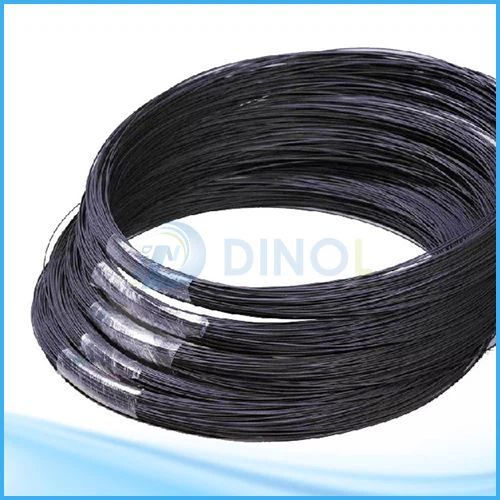
If you are interested in learning more about MMO Titanium Wire or have specific requirements for your application, please feel free to contact us. We are a reliable supplier of high-quality MMO Titanium Wire and can provide you with customized solutions to meet your needs. Let's start a discussion and explore how our products can benefit your projects.
References
- Rowe, D. M. (Ed.). (2006). Thermoelectrics Handbook: Macro to Nano. CRC Press.
- Bell, L. E. (2008). Cooling, heating, generating power, and recovering waste heat with thermoelectric systems. Science, 321(5895), 1457-1461.
- Goldsmid, H. J. (2009). Introduction to Thermoelectricity. Springer.